
Interview | Rafael Barbosa
Our Brazilian drums alumnus shares his music industry experiences in London...
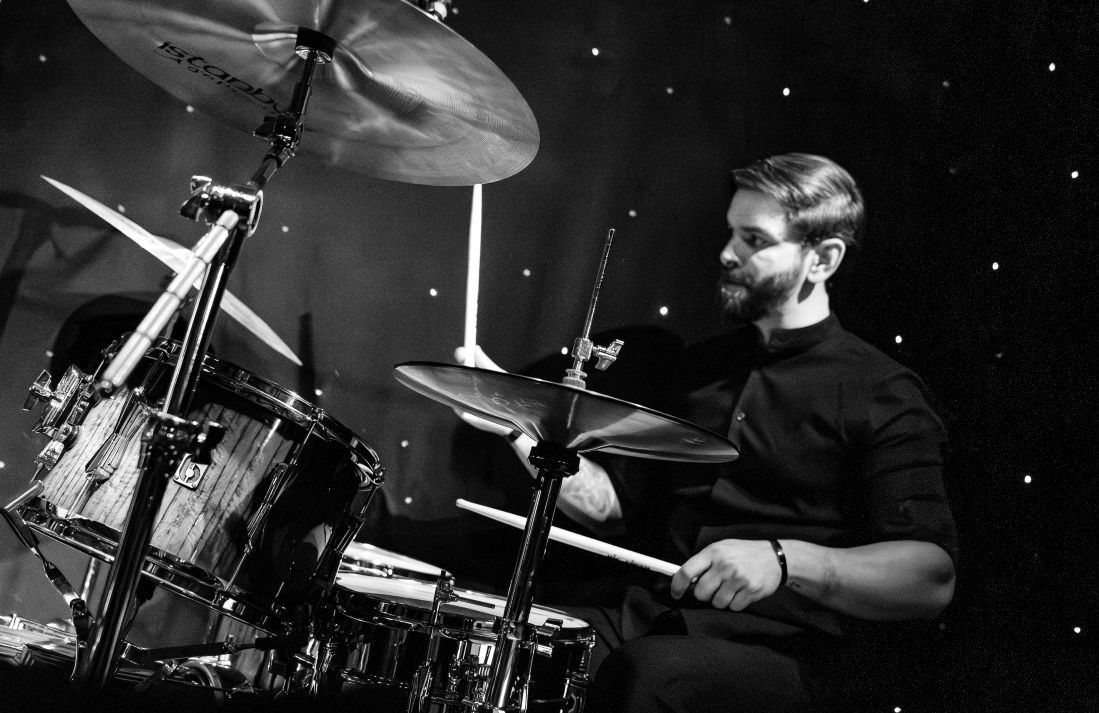
Originally hailing from the Brazilian countryside, Rapha Barbosa is now making waves within London's music industry.
Having completed our BMus Popular Music Performance, Rapha has been keeping busy across a rich variety of musical projects. They include developing a music consultancy for Brazilians who want to understand London's music industry alongside his performing and recording as a session musician.
This includes playing with Brazilian and international artists, working with churches as a drummer, musical director and teacher, while also continuing to stay open to new projects.
In our interview, Rapha delves into how his time at ICMP prepared hiim to launch a career and how he has navigated his way through London's music scene.
How did you first begin playing music? Who were your inspirations?
I was about six years old, growing up in a small town in the Brazilian countryside. My parents used to take me to a small local church, and that's where I met the first love of my life - the drums.
We didn't have many resources, so I built my first drum kit myself. In the neighbourhood, I was known as "the kid with a brick drum kit". It sounds funny now, but at the time it meant everything to me.
I grew up in a musical family. My father is a guitarist and my mother a singer, so music was always around. The church became my first real music school. My biggest inspiration has always been my father, who gave me everything he could so I could go further in music than he ever had the chance to.
What led you to ICMP?
I remember the exact day I discovered ICMP. I was with a friend after a rehearsal and he showed me some videos on Instagram. I watched them and thought yeah, this is it.
At that point I'd already been living in London for about three years. I was playing in churches and teaching music to kids as a volunteer, but I knew I wanted more.
ICMP felt like a passport to the next level. As soon as I discovered it, I didn't really have a plan B. I researched everything I could and the more I learned, the more it made sense."
You're from Brazil. How did you find the move to London?
To this day, I still think about how crazy the move was. Leaving family and friends, moving to another country, not speaking the language properly and not even liking tea that much.
I always liked the phrase life is either a daring adventure or nothing. I'd do it all again. Over the years I fell in love with London's music scene and I can honestly say I'm in the best moment of my life right now.
Being an immigrant is tough though. It feels like starting a game from zero and rebuilding everything. You really have to be sure about why you're doing it.

What were the big challenges? And how did you navigate them?
The biggest challenge by far was my immigration status. At one point during my journey I was detained for 15 days at an immigration centre.
I remember an officer saying: "Son, you don't need to go through this, just go back to Brazil". I replied half serious, half smiling: "Unfortunately you're still going to see me playing around here". In the end everything was resolved through a long process. It didn't break me. It just made me more certain about what I was doing here.
How have you found navigating London’s music scene?
London feels like the Hollywood of Europe for music. You see people from all over the world coming here with the same dream to build a career.
Before ICMP, most of my connections came through churches and the Brazilian community. After ICMP, everything expanded and I started working with artists from different cultures and backgrounds.
That diversity has pushed me musically and personally. It's one of the things I value most about London.
How did you find your time at ICMP? How did your studies help you on your musical journey?
My time at ICMP was really important. It wasn't just about studying music, it was about understanding how the industry actually works.
The course gave me structure, discipline and clarity. I became more confident in my playing and in who I am as an artist.
The team, the tutors and my classmates made me feel supported. That sense of community stayed with me."

What have been the key things you learned?
I learned a lot from day one. One of the biggest things was theory and especially sight reading. That changed my confidence as a drummer.
Every module and every tutor added something. Even things I already knew became clearer and more solid. That has had a real impact on how I approach music today.
How did you find your way in the industry after you completed your studies?
I always tried to get involved as early as possible. I didn't wait until the end of the course to think about the industry.
From day one I focused on building connections and collaborating. Those relationships led to recordings, gigs and opportunities I'd always dreamed of.
For me, the process matters as much as the final result. You can't miss that time.
I'd love to know what projects have been keeping you busy. How are you approaching your music career?
Right now my work is split into two sides.
One is the entrepreneurial side. I'm developing a music consultancy for Brazilians and immigrants who want to understand the industry in London. That also connects with recordings and music production with a small team.
The other side is my work as a session musician. I play with Brazilian and international artists, work with churches as a drummer, musical director and teacher, and stay open to new projects.
Do you have any advice for international students who might be looking to follow in your footsteps?
Don't wait for the perfect moment. Use your time wisely from day one. Build connections, show up, be present and most importantly be useful. That's something I've always taken from Tutor Ben Jones.
Be patient with the process. Things take time, especially in a new country. Stay open to learning, musically and culturally. Just do it."

Or advice for drummers looking to make a sustainable career in the sector?
Being a good drummer is just the starting point. Reliability, attitude and consistency matter just as much as your playing.
Learn how to listen, adapt and make other people sound good. Be easy to work with and be prepared.
A sustainable career is built over time. Show up, do a good job and stay consistent.
What does the future have in store for you?
I see the future as a continuation of what I'm already doing. Growing as a musician, working with great artists and developing meaningful projects.
I also want to keep building things that help other musicians and immigrants find their way. I'm focused on consistency and staying true to why I started.
Watch Raphael perform live in student with ICMP alumna IRIS:
Drums make the world move
Drumming requires incredible coordination, a solid sense of time, and plenty of precision and finesse. Here at ICMP, we’ll pass on all the technical skills and performance, theory, business, production, marketing, and additional know-how you’ll need to fly ahead of the pack. Throughout your ICMP Drums course, you’ll also gain access to everything from rehearsal rooms, top-brand gear, and recording studios to industry events, masterclasses, and a one-of-a-kind community of contacts and collaborators.
Call our friendly Admissions Team on 020 7328 0222 or email enquiries@icmp.ac.uk and get your music career started today.
Drums Courses
Drumming requires incredible coordination, a solid sense of time, and plenty of precision and finesse. Here at ICMP, we’ll pass on all the technical skills and performance, theory, business, production, marketing, and additional know-how you’ll need to fly ahead of the pack. Throughout your ICMP Drums course, you’ll also gain access to everything from rehearsal rooms, top-brand gear, and recording studios to industry events, masterclasses, and a one-of-a-kind community of contacts and collaborators.
Call our friendly Admissions Team on 020 7328 0222 or email enquiries@icmp.ac.uk and get your music career started today.