

ICMP Songwriting Tutors | 2026 | BBC 6 Music Musicology | Part 1
Discover the latest insights from our Songwriting team on BBC Radio 6 Music...
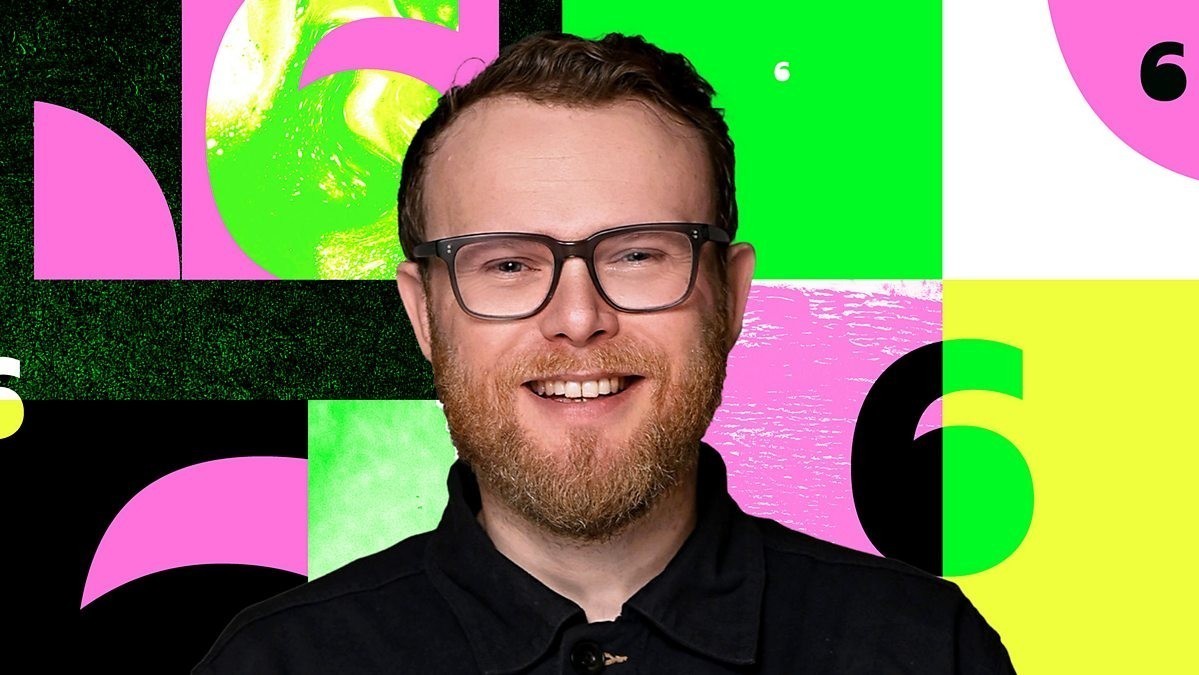
ICMP's Songwriting team joined DJ and broadcaster Huw Stephens' new BBC Radio 6 Music show as Musicologists in January 2024.
Over the past two years, Professor Sophie Daniels and Tutor Anjali Perinparaja have explored song structures, techniques and delved into the magic behind contemporary tracks to learn more about how they are written and put together.
Here, we explore their latest insights from their recent appearances on the show...
Sophie Daniels | Simplicity in Songwriting
I once heard a conversation about a new Ringo Starr book and this age-old joke about him came up; that Ringo wasn't even the best drummer in the Beatles. But it made me wonder why this joke existed in the first place?
It's because many people assume that anything good also has to be complicated.
As a drummer, Ringo defied any pressure to show off his technical skills and was a master of simplicity, he played what each song needed from him to create innovative and simple drum patterns. It's so important to know the power of musical simplicity in the context of a song or band.
Another drummer who is an expert of this is Meg White of the White Stripes
The White Stripes | 'Seven Nation Army'
Keith Richards once famously said it's not about what you play but what you don't and Meg is a great embodiment of this.
Another example of another instrument played through this creative approach is the sound of Talking Heads and Tom Tom Club bassist, Tina Weymouth.
Tina is a founding member of these groups and co-wrote many of their songs. Her simple, brilliantly effective bass playing is the emotional basis of Talking Heads' 'Psycho Killer'.
Talking Heads | 'Psycho Killer'
Oftentimes, simplicity is successful in songwriting although the relationship between the music and words usually means only one can be complex.
For example, if you write complex words, then you need simple chords and some genres that are musically complex need less lyrical content. Word-heavy genres like folk/country often have fewer chords to construct them.
Many songs are built out of three chords or the same four chords - it's very hard to make a song out of just one or two. This happens rarely but a great example is 'Connected' by the Stereo MC's. It's based on a mode, a type of early scale or family of notes that work together but stay in the same place. In this case, it's the Dorian mode but the music stays in one place.
Stereo MC's | 'Connected'
With lyrics, simple ones are as effective as complex ones. It's interesting to consider how simple lyrics can be brilliant and this happens in different ways for different reasons. Some might think of great lyrics as being full of metaphor, poetry, grandeur and use of extraordinary language, which is possibly why there was some outrage at Bob Dylan getting the Nobel Prize for Literature in 2016. However, crucially this was not among music critics or songwriters. He's one of the best writers when it comes to using lyrical simplicity.
One of the stories I love about him is when he had written 'Blood on the Tracks', he played it live to friends before recording it, including Crosby Stills and Nash. Stephen Stills said Dylan was a good songwriter but not a great musician - and often being too good a musician can get in the way of a great song.
Perhaps no one has written as many great, yet simple songs as Bob Dylan has. The music has to be simple because the lyrics are complex in their meaning and construction, yet still simple in language. 'The Times They Are A-Changing' could not be more current in what it is saying, despite it being written in the sixties.
Bob Dylan | 'The Times They Are A-Changing'
Dylan is brilliantly unique in how his lyrics and delivery feel conversational, having this awareness of an audience while also being himself. Whether it be about a relationship in 'It Ain't Me Babe' or about politics in 'The Times They Are A-Changing', he's telling it like it is and in the best way to grab our attention as an audience. He often calls out extraordinary things but with the urgency of someone who needs to be understood to get their point across.
Lyricists can take a similar approach to screen writers, this is another take on simplicity and it is to show, rather than tell. It's a common concept in movies and well known in songwriting circles, so the songwriter tells you a simple story with simple lyrics but shows you something about the human condition through their story. There are hundreds of great country songs that do this and an outstanding example of this is Erin Enderlin's 'You Don't Know Jack'.
Erin Enderlin | 'You Don't Know Jack'
This is such a brilliant example of simple storytelling and it tells the story in the first person of a narrator coming across a homeless person who is drinking and asks for money. What is said between the characters gets inside the complexity of the situation, much in the same way as the narrative of a film. The song might seem simple but it tells you so much about life just like a movie because the lyrics are so simple and straightforward as opposed to being overly poetic.
In pop songwriting, there are many examples of simplicity in expression being utilised to make clear and powerful statements - one example would be 'Imagine' by John Lennon. Everyone knows this song, and of course the statements themselves appear simple, but what's clever is the depth of thinking that has gone into what the song is saying. It's been banned many times as it is so powerful in its case for peace rather than war - it's like a great political speech.
To finish, I'm going to play one of the best simple songs ever written about love: 'I Can't Make You Love Me' by Allen Shamblin and Mike Reid. There is no single wasted syllable in this lyric. It explains so much about unrequited love and in fact, what love is, through the power of simple heartfelt statements. Of course, originally recorded by Bonnie Raitt ... let's hear Bon Iver's cover
Bon Iver | 'I Can't Make You Love Me'
Anjali Perin | D'Angelo and The Soulquarians
In this edition, we're going to celebrate the memory of D'Angelo, the amazing writer, producer and musical enigma. He was a central founding member of the Soulquarians who brought a wealth of talent and voices to the hip hop and soul world of the late nineties and early noughties.
We were live on air when the news broke of D'Angelo's passing after a fairly long and private journey with cancer. There have been so many tributes since he's left us, to show just how widely his influence has spanned beyond the worlds of soul and hip hop.
The Soulquarians were all artists in their own right but working at this intersectionality of hip hop, soul, gospel and jazz during this period and they created this very influential new sound.
There are plenty of iconic albums to come from the various members of this group. To start, let's go with D'Angelo and his work on the 'Voodoo' album. His father was a minister who himself played organ and piano. D'Angelo began with this huge gospel influence which you can hear in his music alongside his mother being a jazz fan who would play the albums of Miles Davis and John Coltrane and other great musicians at home.
D'Angelo was able to take on these influences and was a great piano player so he knew how to build these lush backing tracks you get in gospel and jazz, the textures of the softer keyboard sounds such as the Hammond Organ and Fender Rhodes.
A key influence was Maggie Ingram and the Ingramettes. In their track, 'Just As Long', you can hear how gospel harmony works, it's really special, it has this strident way of building, it moves you forward as we know how this song is built around the church. Also, the way the harmonies of the vocalists work, the backing vocals are close and scrunched together which gives a lot of texture and depth to the music.
Maggie Ingram and the Ingramettes | 'Just As Long'
The gospel feel comes from the way those chords are played and D'Angelo completely understood that and really consciously did the same thing on his music. When you hear those chord changes in the way they are played, it brings this emotional energy to what's going on and it's really uplifting. 'Higher' from 'Brown Sugar' features these gospel touches.
D'Angelo | 'Higher'
Prince was also a huge influence and D'Angelo was vocal about this as well as artists like James Brown, Stevie Wonder and Michael Jackson. We also know that Prince's style of singing was like Marvin Gaye and Al Green with this falsetto vocal range. D'Angelo had such an incredible range from the high to the gutteral, just like Prince. Prince also had the multi-genre approach too - he could do soul, gospel alongside harder blues and rock alongside the male vulnerability and sensuality. On this track from his 1978 debut album, 'For You', Prince had these amazing rhythmic ideas, he could arrange things to have these real pushes and pulls.
Prince | 'Baby'
Now let's listen to 'Cruisin', D'Angelo's cover where the vocal style is very similar to Prince.
D'Angelo | 'Cruisin'
'Brown Sugar' shows off D'Angelo's gospel influences and the whole album was a real statement of intent to fuse these different styles but the gospel side was really evident. That makes sense as it was such an important early influence. When 'Brown Sugar' came out, it inspired musicians to want to forge new territory within soul, hip hop and funk. One of them was the drummer, DJ and producer Questlove who was already working with the Roots and an artist who actually turned down the chance to play on 'Brown Sugar'. The album came out in the mid-nineties, and, at the time, there was a lot of smooth, R&B and soul being released. Questlove wanted a more live, raw sound and thought this album from D'Angelo would be similar to the other artists writing and recording back then.
There was an occasion at a ceremony where the Roots/Questlove were playing with D'Angelo present. There was a particular drum roll that featured in one of Prince's tracks. Questlove played this drum roll and D'Angelo noted it and that connected the two as kind of musical soulmates from thereon in. Erykah Badu was there at the time too, and mentioned how Questlove and D'Angelo had a musical 'bromance' from this point on and that led was the tipping point into the making of 'Voodoo' and the whole creative process behind it.
Questlove was a real influence on 'Voodoo' and the Soulquarians, bringing that sense of live playing into hip hop outside of just sampled drum grooves - which was already established in his role as drummer and musical visionary within the Roots and their sound.
The Roots | 'The Next Movement' (from 'Things Fall Apart')
You can hear the live element and Jazzy Jeff features on this track too. This album was making waves at this point due to the live feel and how committed Questlove was to making music that was not overproduced.
D'Angelo and Questlove had a conversation about the music they wanted to make. It started with D'Angelo wanting to base himself out of Jimi Hendrix's Electric Ladyland studio in Brooklyn, New York. I think that studio had gone into less use but Stevie Wonder's 'Talking Book' album was made there, there was lots of vintage gear and the ethos was around analogue production. This was something D'Angelo wanted to embrace.
The pair had this amazing research phase and used the studio as a musical research laboratory. They wanted to pay homage to many African/American music that had gone before in the process of crafting something new.
They found live video performances of their favourite artists, then sat in the studio and pored over these videos, watching these artists and every detail of how they made their music, the arrangements and production. Then they would go in the studios themselves and jam for hours, taking inspiration from the videos and turning it into their own music. This is why 'Voodoo' took so long to make as they spent years researching and recording.
The concept of the Soulquarians came from Questlove and D'Angelo undertaking all this research at Electric Ladyland. The studio was starting to get used again by other artists so artists came into contact with them who they wanted to work with. The founding members were Questlove, D'Angelo, but also the amazing producer J-Dilla, and the keyboard player and producer James Poyser.
The name came as they all happened to be of the same Zodiac sign, Aquarius. After that, other musicians such as Mos Def, Common, members of the Roots, all started to get involved too - they were all drawn together by Questlove and D'Angelo, and this shared value of wanting to do something new and subvert expectations surrounding Black music too.
Dilla has revolutionised so much music in terms of bass, drums and production techniques and how we place the beat, he redefined things and Questlove was blown away by how he influenced his own drum playing.
Dilla had what we call 'the Dilla drag', where he played around with microtiming - everything hits differently in terms of the drums and how they hit on this track from Slum Village.
Slum Village | 'Players'
Dilla knew exactly what he was doing, he was such a precise musician and producer, he worked with this idea of microtiming. Microtones are when a note is split into smaller intervals, and Dilla did the same with beats, he split them and would place them around a piece of music - things wouldn't always hit at the same time and it created this lopsided side to the music. With Slum Village, it has this slightly lazy feel to it and you can hear this influence on 'Voodoo' coming through.
D'Angelo's 'Playa Playa' is very much influenced by this - the drums and bass are all sitting in different pockets of rhythm.
D'Angelo | 'Playa Playa'
You can hear this slight sense of delay and how the instruments had to work differently for them to gel together. Questlove often says how J-Dilla changed his approach to his kit, how he should be playing the groove, the beat was redefined in this way. There are other elements that come in and occupy the musical space. Dilla is an expert on keeping you in the groove and pocket - there's musical chaos going on but it works so well.
If you listen to funk, or take it and slow it down, then you will get this musical experience of things being slightly out with each other but all somehow holding together - you can hear it in James Brown's track, 'The Payback'.
James Brown | 'The Payback'
There's so many examples there of the story of the Soulquarians.
Erykah Badu was a huge part of the collective, we had rappers like Common and Jill Scott but she was the best known vocalist from the collective and recorded her album 'Mama's Gun' at the same time as 'Voodoo' was created.
There was an exchange of ideas and approaches but her music is darker in terms of lyrics. At the time, many female soul singers were sweet and sang about love stories.
In Badu’s song, 'Penitentiary Philosophy', the subject matter was quite different and heavy and Badu was unafraid to go there. The same groove is in there too in 'Didn't Cha Know'.
Erykah Badu | 'Didn't Cha Know'
The Soulquarians is a great story of how the group came together. To play in full, I've chosen D'Angelo's 'Send it On'. I've chosen this because the title is so appropriate to what they were doing in terms of their legacy, so many elements from the gospel to the rhythmic hits, the falsetto and jazz elements alongside the Dilla feel and the laid back groove.
D'Angelo | 'Send it On'
Sophie Daniels | De La Soul
There are so many influences and multi–genre work within the music of De La Soul. Their album '3 Feet High and Rising' has samples from a hugely diverse array of artists including Johnny Cash, Hall & Oates, Steely Dan and The Turtles. However, perhaps the most interesting influence on that single is a lesser known artist called Edwin Birdsong. A musician, composer and artist from the seventies and eighties who made experimental/funk disco, Birdsong went on to lead jazz bands among other things. His music has been sampled by numerous hip hop artists and his track 'Rapper, Dapper Snapper' makes up the percussion and bassline of 'Me, Myself and I'.
Edwin Birdsong | 'Rapper Dapper Snapper'
There were lots of creative influences in the single and album - but who were the broader influences for De La Soul?
De La Soul cited early influences like NWA, Ice-T, Biz Markie, Afrika Bambaata, showcasing their socially conscious hip hop roots but their production style is influenced by a wide array of sources - jazz, funk, soul and hip hop figures such as Run DMC and Ultramagnetic MCs.
Run DMC | 'It's Like That'
They were influenced by those around them too. They are part of the rap collective, the Native Tongues, a collective known for their socially conscious, positive-minded and good-natured Afro-centric lyrics. Also, for the pioneering use of jazz-influenced beats and eclectic sampling. The main members of the collective included Black Sheep, Moni Love, Tribe Called Quest, Queen Latifah, Jungle Brothers, then later Busta Rhymes and Mos Def - then they were closely tied to the Universal Zulu Nation.
Queen Latifah | 'Ladies First'
Native Tongues made music in different formations. Their definitive track, according to Rolling Stone magazine, is 'Doing Our Own Dang'.
The Jungle Brothers feat De La Soul, Q-Tip and Moni Love | 'Doing Our Own Dang'
The Native Tongues collective were influenced by Grandmaster Flash, Gill Scott Heron and the Last Poets. The latter were poets, activists, and public speakers - you can trace the birth of hip hop to the summer of 1973 when the first extended breakbeat was played in the South Bronx. However, you can trace its conception to five years earlier when the founding members of the Last Poets met in 1968 in Mount Morris Park in Harlem and said their first poems in public. They did this to commemorate what would have been the 43rd birthday of Malcolm X who had been killed three years earlier.
The Last Poets | 'When the Revolution Comes'
The Last Poets are a really interesting part of music history who influenced the Native Tongues. Gil Scott Heron is an important influence from this period too - he was a music and spoken word artist who debuted in the seventies with his debut album which spoke on topics like; racial injustice, black activism, mass consumerism and more. His influences were Richie Havens, John Coltrane, Billie Holiday, Nina Simone, Otis Redding and more. His track, 'Lady Day and John Coltrane', is where he pays homage to these influences.
Gil Scott Heron | 'Lady Day and John Coltrane'
This track of course was inspired by the important jazz artist, John Coltrane. De La Soul themselves list, amongst the great jazz musicians, that Miles Davis and John Coltrane were very important influences on them. Lets hear some John Coltrane next:
John Coltrane | 'Giant Steps'
Alongside John Coltrane, another artist is Richie Havens, an American singer and guitarist. His music is folk, soul, rhythm and blues with a long and varied career - perhaps best known as the artist who opened up the first day of the Woodstock Festival in 1969. He had to play for longer than expected as the artists coming on after him were delayed in their arrival.
Richie Haven | 'Freedom'
So, tracing the family tree backwards, if we go back yet another generation, then the most notable is singer songwriter Nina Simone. She inspired Richie Haven's singing style and approach to covering other artists songs - she must be on the family tree of most of the artists we've mentioned today, she is influenced by jazz, folk, blues and classical music, she was really passionate about classical music initially with an ambition to be a concert pianist. Her repertoire incorporated all these styles to create this rich tapestry of music that resonated with an unusually diverse audience, just like De La Soul. She was also influenced by writers like James Baldwin and the theatre maker, Lorraine Hansberry - 'Young, Gifted and Black' was based on the play of the same name by Hansberry.
Nina Simone | 'Young, Gifted and Black'
Write songs that last for generations
A great song can become truly timeless, remembered for generations as part of the world’s cultural legacy. Whether you want to craft a killer melody or pen poetic lyrics, our tutors will teach you everything you want to know, including all the production, performance, professional and entrepreneurial skills needed to ensure that your unique creations get the recognition they deserve. You’ll also benefit from A&R-style critique sessions, collaborative opportunities, access to fully equipped live rooms, recording studios and tech suites, and a community of inspiring contacts and friends.
To catapult your songwriting and music career to a whole new level, email our friendly Admissions Team at enquiries@icmp.ac.uk or give them a call on 020 7328 0222.
Songwriting courses
A great song can become truly timeless, remembered for generations as part of the world’s cultural legacy. Whether you want to craft a killer melody or pen poetic lyrics, our tutors will teach you everything you want to know, including all the production, performance, professional and entrepreneurial skills needed to ensure that your unique creations get the recognition they deserve. You’ll also benefit from A&R-style critique sessions, collaborative opportunities, access to fully equipped live rooms, recording studios and tech suites, and a community of inspiring contacts and friends.
To catapult your songwriting and music career to a whole new level, email our friendly Admissions Team at enquiries@icmp.ac.uk or give them a call on 020 7328 0222.