

ICMP Songwriting Tutors | 2025 | BBC 6 Music Musicology | Part 4
We discover all the latest songwriting insights from our team's BBC 6Music interviews...

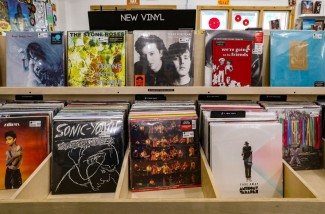

ICMP's Songwriting team joined DJ and broadcaster Huw Stephens' new BBC Radio 6 Music show as Musicologists in January 2024.
Since then, members of the Songwriting faculty have been interviewed by Huw to discuss different aspects of the songwriting process.
The slot has seen Professor Sophie Daniels, Daniel Green, Head of Academic Development, and Tutor Anjali Perinparaja explore song structures, techniques and delve into the magic behind contemporary tracks to learn more about how they are written and put together.
Check out our first, second and third blogs from the team in 2025 and uncover their latest insights below...
Dan Green | Clem Burke
Today, we're going to commemorate the great Clem Burke, Blondie's drummer who sadly recently passed away.
It's always sad when a musician dies, but it does provide an opportunity for their musical impact to be considered. Clem Burke was a powerhouse drummer who provided Blondie with solid beats and grooves for nearly 50 years. In keeping with Blondie's punk roots and also reminiscent of drummers like Keith Moon, his drumming style was a mix of high energy, technical precision and musical versatility.
Clem Burke was clearly an essential element in Blondie's sound. The excitement in his playing was enthralling and he also provided Blondie with key sonic hooks within their tracks. Curiously, and perhaps a symbol of how essential he was as a band member, many Blondie tracks begin with an isolated drum break or drum fill during the introduction. This happens in their track, 'Dreaming', from 1979.
Blondie | 'Dreaming'
There is a mixture of a regular back beat but he's including single stroke rolls on the toms and snare drum. It's the tempo and hard-hitting dynamics that make it technically and physically demanding to play.
Another amazing Blondie track with a drum groove intro is 'Rapture', a song released in 1981.
Blondie | 'Rapture'
Though 'Rapture' was by no means the first hip-hop record, it was a landmark recording for its era - blending together rock and East-coast hip-hop. Since hip-hop had yet to have its commercial breakthrough, for many listeners, 'Rapture' was their first exposure to rap within a pop record.
Clem Burke's accompanying groove laid the foundations for this influential record. The final example of a Clem Burke drum introduction I'd like to highlight is 'Screaming Skin', the opening track from Blondie's 1999 'No Exit' album. Similar to 'Dreaming', this opening drum part also uses semi-quaver single stroke rolls around the drum kit.
Blondie | 'Screaming Skin'
Outside of Blondie's rhythmic backbone, Clem also played for other artists too.
In 1982, Clem was the drummer on Iggy Pop's 'Zombie Birdhouse' album, which was a sprawling mix of punk, experimentalism, and art rock. The drumming ebbs and flows against the instrumentation and Iggy's free and untamed vocal delivery. From the album, here's 'Run Like a Villain'.
Iggy Pop | 'Run Like a Villain'
Then, after Blondie split in 1982, Clem was the touring drummer for the Eurythmics and played on several albums. After Clem's passing, Dave Stewart remembered how explosive he was as a drummer and how he found it difficult to take his eyes off him during gigs. For me, his best Eurythmics contribution was his drumming on 'Thorn In My Side', a perfect piece of power pop that is served brilliantly by his drumming. He provides a solid groove which is present but doesn't distract from the lead vocal.
Eurythmics | 'Thorn In My Side'
Clem Burke got the world dancing with 'Heart of Glass'. It was a departure from previous Blondie recording sessions, which were predominantly based on capturing live performances. On the direction of producer Mike Chapman, the drums were recorded differently for this particular record. Clem played alongside a Roland CR-78 drum machine, which was a new experience, and the drum texture was pieced together through the production process. This involved adding layers upon layers to each individual part, which resulted in a thick, punchy drum sound.
Blondie | 'Heart of Glass'
I mentioned it earlier but one of my favourite tracks is 'Dreaming'. Much more inventive than a regular drum groove and as Clem told 6Music in 2017, it's hard to believe what we hear on the record is actually the first take. He was a real talent and inspiration and the influence of his drumming will live on.
Anj Perin | Writing in the Key of …
We're looking at the 'writing in the key of…' technique that many songwriters use as a way to craft ideas through specific imagery and metaphor.
Across all musical genres, we can see a lot of the use of similar devices in poems and songwriting - these include storytelling, expression of emotion and how these creations convey a message. Today, I want to highlight how different songwriters use such sensory cues to draw us into the world they want to create for a listener.
We call this 'writing in the key of…' and it relates to the lyrical craft. When we talk about this, we are talking about how the writer sets up the world for their song by clearly linked descriptive wording. This creates a clear tone, place and character.
I wanted to start with this lesser known song, 'Dawntreader', taken from Joni Mitchell's 1969 album, 'Songs for a Seagull'. You could describe this song as being written in the key of sea voyage in an old folkloric way. She uses lots of nautical references and specific words like 'galleon', 'treasures', 'ocean', 'fleet wings', 'rigging', 'harbour', 'mermaids' - these details pull the listener into the nautical setting which is inviting someone to take a voyage of discovery in a relationship. With Mitchell's lyrical tone, it's almost like she has a siren-like voice calling to someone to find treasured love.
Joni Mitchell | 'Dawntreader'
There is a huge link to poetry in Joni's songs. For me, it's a great starting point when exploring her work but it's also about how the sense of detail and setting can work quite subtly too.
I also thought it would be interesting to contrast this with contemporary songwriting in rap and hip hop. In these styles, there are details that give us a sense of a place and culture in a more contemporary way. We get to understand the neighbourhoods where rappers live, and the everyday scenes of life. Skee-Lo's 'I Wish' is set in the key of urban California, and in the song he's commenting on the girl he wants but she's only interested in alpha male basketball types. It's all set to this backdrop of cruising down the boulevard in California, his language is evocative with terms like 'concrete jungle', 'hoodrats' and references to cars, areas and local roads. All the details situate you in this world and draw you into the song's narrative that creates sympathy for the underdog character he embodies.
Skee-Lo | 'I Wish'
Metaphor and imagery can be used to give attributes to a character or place you want to convey. A great example is 'Damn Dog' taken from the 1980s film 'Times Square' but covered by the Manic Street Preachers for their debut album, 'Generation Terrorists' in 1992. The original writers were Billy Mernit and Jacob Brackman and the film was very influential for the Manics who amped up the song in their version. This song is written in the key of a rabid dog, which makes it very unusual. But the lyrics go into this sensory detail with the dog personified to express the narrator's feelings for someone. It uses words like 'lick', 'teeth', 'bite', 'rabies', 'howl' so it's evoking these primal, animalistic behaviours but attributing them to human feelings and actions.
Manic Street Preachers | 'Damn Dog'
Having this idea around a song allows you to be really accountable in your storytelling and your detail. It gives your song structure in a family of terms and wording that provide consistency for the world you're creating. Sometimes, songwriters do this from the beginning of the songwriting process in the brainstorming of the vocabulary. But it also happens via the redrafting stage to really embed the themes.
The next example is 'Space Oddity' by David Bowie from 1969 with the lyrics from this song fully embodying the sense of space travel and being away from life on earth. This begins with the countdown at the start of the song as Major Tom lifts off - we also have very specific words - 'capsule', 'ground control', 'floating', 'stars' - it underlines how we're looking down on planet earth, this idea that you're up there in space with him reflecting on life back home.
It just brings you into feeling this sense of distance, isolation and loneliness for the song's character.
David Bowie | 'Space Oddity'
This is a really special song that still gives me goosebumps due to how it has this sense of place and the writing is really accountable to that.
Ultimately, using sensory language and detail, imagery and metaphor are all there to add detail to connect the listener to your song, to bring them into the song/experience rather than them being passive.
I wanted to finish with another song where language is so excellently handled - and this is Lapsley's song, 'Hurricane'.
In her song, the lyrics say 'I'm a hurricane/I'm a woman in love' - we already have this kind of intention being set there - but within that, the song lyrics are written in the key of weather and movement. We have vocabulary that supports this - 'storms', 'clouds', 'waterfalls', 'riptide', 'point break', 'tidal' - this is layered throughout the lyrics to really build up the emotive message in the storytelling. The musical accompaniment reflects this changing pace and movement with the whole song acting as a great example of all these elements coming together and holding so well.
Lapsley | 'Hurricane'
Sophie Daniels | Pronouns
This week, we're talking about grammatical tenses and pronouns in songwriting. This topic is fascinating to songwriting nerds and it's essential to know how to deal with pronouns - you, me, I, they, he etc - if you want to write great lyrics.
The first point to consider is storytelling. Of course, so many songs tell stories both real and fictional. To start with, let's look at a song that tells us a story written in the first person.
This is by Cat Stevens, now known as Yusuf Islam and is 'The First Cut is the Deepest'.
Yussef Islam | 'The First Cut is the Deepest'
This is a great song written in the first person. As it's so well-crafted, its a great example of how the singer manages to introduce you to three characters within the first 20 words.
We know who they all are and how they relate to each other - for example, 'I' have given 'you' all of my heart and 'she's' taken all that I have. It's great management of pronouns used to set up the premise of the song, which is to explain why the first cut is the deepest.
That's the first person perspective. Now, let's look at an example of third person narrative, where pronouns are 'she', 'he' and so on. A lot of songs tell us what are clearly fictional stories, where the singer is a narrator rather than a character. Tom Waits is one of the best writers of fictional, brilliantly crafted songs. One of my favourites from him is this:
Tom Waits | 'Red Shoes By the Drugstore'
Waits is known for his unparalleled use of detail, imagery and storytelling and this song is like a short movie, you listen and can see the action unfolding in your head. Songs allow you to visualise your own version of the story but they use far less words than short stories, meaning you need to get every pronoun user right so the listener can follow what is happening. Waits uses 'she' and 'he' in the first section to introduce the characters, then he has his lead male character speak too.
So when Waits sings 'Bring your raincoat, suitcase and your dark eyes', we already assume that it's the main character speaking rather than the narrator. We follow this as dialogue in the lyrics. It's only possible to write a movie in a song like Waits does with flawless use of pronouns.
Second person in songs
A super interesting aspect of song lyrics compared to other forms of creative writing is how we use second person narrative - it's not used that much in other writing forms.
This is when the pronoun 'you' is used but you might mean it as 'I'. For example, you can be talking about yourself or to yourself. But equally you might be narrating for the listener on their behalf, casting them in the drama.
Leonard Cohen | 'Suzanne'
Cohen brings us into the feelings of the experience in this song by using the pronoun 'you'. This is so helpful in songwriting as it allows you to speak for yourself, tell your own story and create this ambiguity that you might have in a conversation where you're talking about what happened to you. But you're also drawing your listener in and asking if they can relate to this.
In this song, Leonard Cohen tells us what happened with him and Suzanne but using the second person gives it this universal quality that also helps us understand it's about more than the exact details of the story. In fact, it's a song about two people relating to each other on a deeper level and the second person narrative allows us to cast ourselves as a protagonist in the song.
How people relate to your song depends on whether you've chosen the first, second or third person - and it can determine whether your lyrics work or not.
Songwriters do not have to stay in one tense throughout a song. However, for it to be successful, this needs to be managed very carefully.
Boy Genius | 'Emily, I'm Sorry'
Pronouns are a hot topic in our society, music and art at the moment and writers like Boy Genius have created inspiring and beautifully navigated songs that challenge heteronormative ideals and language. In this song, Phoebe Bridges is singing about a past relationship with a woman called Emily and using the pronoun 'she'. However, the song moves effortlessly from the third person in the verses - 'she's in the back seat' - to first person at the start of the chorus - we hear 'Emily, I'm sorry, I just make it up as I go along'.
This is a well known songwriting technique. It's similar to films when the camera zooms right in to get the listener closer to the action and emotion.
Many artists use art to challenge the status quo like this and John Grant has long written great love songs in the first and third person. It doesn't just matter in terms of equality but also in art too - in the particular, lies the universal. To create emotional connections in songs like this, you need to write truthfully and with detail to get the listener to relate to you. If you do write your own story faithfully and well, everyone can connect to the human lived experience, whoever you are.
Lucy Dacus | 'Best Guess'
It's clear this is a queer romance from the details at the start of this song, it's modern and timeless due to how insightful it is about modern relationships.
As the song unfolds, it offers this pragmatic take on love. What makes it so emotional, is how it has such disarming truth and honesty to it - 'If I was a gambling man and I am, then you'd be my best bet' - it appears she uses this phrase as a generic term.
Not everyone is a musicologist but pronouns are important as songs are everywhere, they affect our language and culture, often without us noticing. This tells us a universal truth about love and relationships between two people - because of the honesty and details, it's easy to relate to.
Dan Green | Brighton's Music Legacy
Today, we're going to be looking forward to The Great Escape Festival in Brighton by exploring the history of Brighton's thriving music scene.
As well as being one of England's most culturally diverse cities, Brighton has a varied and exciting musical history. Though today we'll mostly be discussing the various genres and subcultures that have emerged from the city, Brighton also has a rich history when it comes to classical music, with the Dome venue being one of the UK's most distinctive concert halls. When it comes to popular culture, however, Brighton is legendary for its various music scenes.
Mods vs rockers
This was a rivalry for the ages featuring two distinct groups adopting very different outlooks and modes of expression. Rocker subculture has its origins in the 1950s rock'n'roll scene. They were rebellious, lived life on their own terms, dressed in leather jackets, tight jeans, with slicked back hair. This was in stark contrast with the mods who wore suits, clean-cut outfits, listened to jazz, r'n'b, and soul. Though they actually had some musical things in common, such as a love of blues music.
There were clashes on several beaches on the south coast. 'The Battle of Brighton', as it was dubbed by the British media at the time, was where a series of fights broke out between the mods and rockers in 1964. The violence was somewhat overblown by news outlets, but the myth and legend of the Brighton beach fights positioned the city firmly in British cultural history. To demonstrate this point, let's look ahead to the 1970s. The Who, a favourite band of the mods, released the 'Quadrophenia' album in 1973 which placed Brighton as the backdrop of the unfolding drama within the album's lyrical narrative.
The Who | 'Love Reign O'er Me'
A sub-label of Loaded Records, during the 90s, the Brighton-based Skint Records were significant players in the dance music world and for a period, were responsible for bringing a distinct form of underground music, known as big beat, to the masses.
Its accessibility can be attributed to its hybrid sound – a mixture of up-tempo hip-hop aligned with house and techno tendencies, with a rocky aggression. With this description in mind, Fatboy Slim truly epitomised the Skint Records sound and he also became the sound of Brighton for many listeners.
Fatboy Slim | 'Santa Cruz'
If Skint Records released the tunes, then the Big Beat Boutique proved to be the perfect venue to play the tunes. Created by Gareth Hansome, the Boutique reflected Brighton's, chilled-out, holiday feel surroundings. In 2002 Gareth Hansome said: "We have always been Brighton bonkers. We do things differently here. We are virtually an island, with the sea in front and the Downs behind. It gives this place a unique atmosphere you won't find anywhere else."
The Lo Fidelity Allstars | 'Dark is Easy'
As regards the Great Escape, some highlights include the amazing duo, Blue Lab Beats for a while. Their sound, influenced by jazz and hip-hop pioneers and the African diaspora, showcases their versatility and innovation.
Blue Lab Beats | 'Pineapple'
Geo Aghinea is definitely worth checking out and their 'Fell In Love With An Alien' track, I love their expression and approach to songwriting and performance. It's really provocative and musically intersectional.
Geo Aghinea | 'Fell In Love With An Alien'
The final track I'd like to play in full is 'Everyone's A V.I.P. to Someone' by Brighton's very own The Go! Team. The track is uplifting, emotional in parts, and to me, perfectly encapsulates sunshine.
The Go! Team | 'Everyone's A V.I.P. to Someone'
Write songs that last for generations
A great song can become truly timeless, remembered for generations as part of the world’s cultural legacy. Whether you want to craft a killer melody or pen poetic lyrics, our tutors will teach you everything you want to know, including all the production, performance, professional and entrepreneurial skills needed to ensure that your unique creations get the recognition they deserve. You’ll also benefit from A&R-style critique sessions, collaborative opportunities, access to fully equipped live rooms, recording studios and tech suites, and a community of inspiring contacts and friends.
To catapult your songwriting and music career to a whole new level, email our friendly Admissions Team at enquiries@icmp.ac.uk or give them a call on 020 7328 0222.
Songwriting courses
A great song can become truly timeless, remembered for generations as part of the world’s cultural legacy. Whether you want to craft a killer melody or pen poetic lyrics, our tutors will teach you everything you want to know, including all the production, performance, professional and entrepreneurial skills needed to ensure that your unique creations get the recognition they deserve. You’ll also benefit from A&R-style critique sessions, collaborative opportunities, access to fully equipped live rooms, recording studios and tech suites, and a community of inspiring contacts and friends.
To catapult your songwriting and music career to a whole new level, email our friendly Admissions Team at enquiries@icmp.ac.uk or give them a call on 020 7328 0222.