

How to Build the Perfect DJ Set
We explore what emerging DJs need to remember to give them the best chance of success when playing.

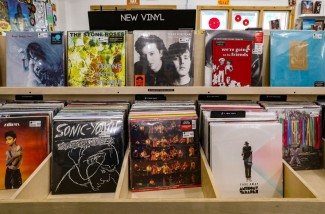

From developing an extensive library of music to finding your sound and honing your technical abilities, the DJ's skill set in today's club world needs to be varied.
Despite the evolution of the electronic music landscape, the DJ's core responsibility remains the same as it always has been - to make people dance by building the perfect (or at least best) set they can.
How this sounds is down to the context of a DJ's set, their music and the personality of the DJ themselves.
There are many brilliant selectors out there to look to for inspiration from Francois K, David Mancuso and Greg Wilson to today's greats including Peggy Gou, Annie Mac and HAAi.
In our latest guide, we explore what emerging DJs need to do to give them the best chance of success when playing records - and some of the key considerations they need to remember when crafting the perfect set...
Understand your audience and event setting
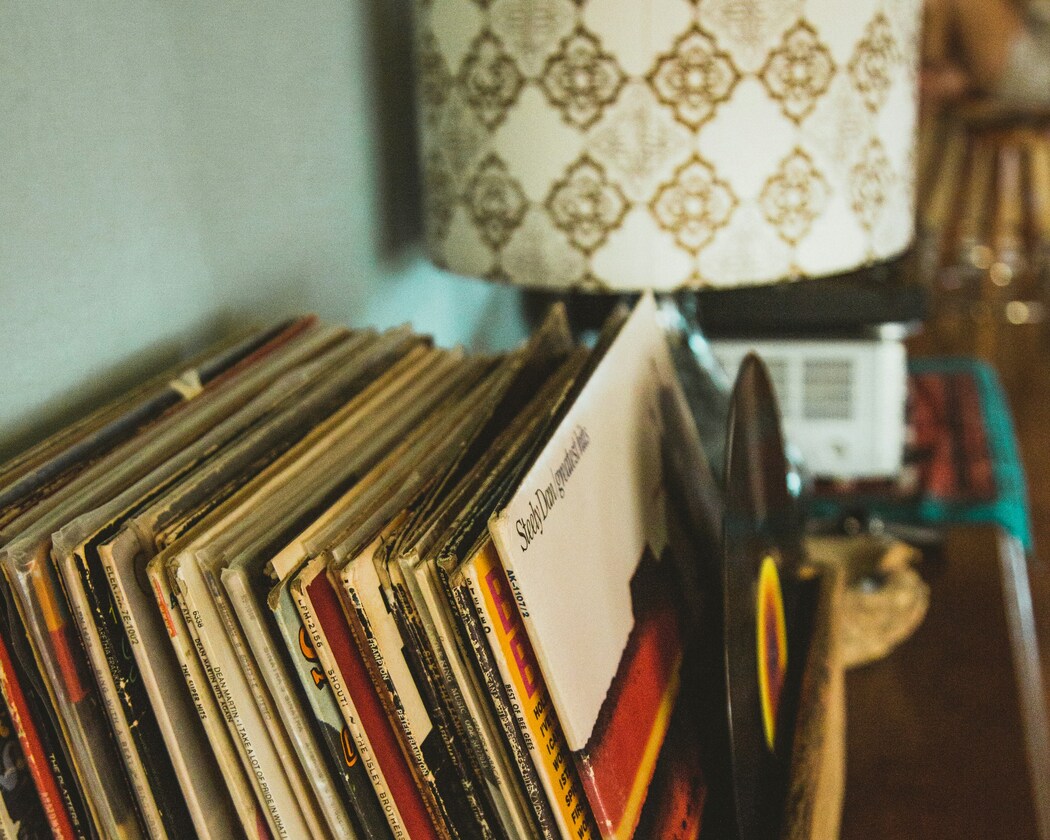
Before you press play on your music, aspiring DJs need to think about the context of their set. Who is the audience you are playing for, and what is the setting? Is this for a club event, a festival or something else such as a wedding or birthday party? Will it be in-person at a club or for an online stream?
Also, as the DJ, what are your responsibilities? Are you just arriving to play your choice selections or do you need to bring any equipment, whether it be headphones, sound system and more.
It almost goes without saying but if you want to give yourself the best chance of a stress-free experience, then do your preparation.
Practice during the run-up to your set. Although you might not want to have your tune selection mapped out, it can help to ensure you have been through some effective transitions and mixes beforehand.
Arrange your music library
Organise your music, whether that be in the form of records, CDs or a USB stick ahead of time.
If you are playing digital music via a thumb drive, then make sure you have a back up with you too. Tag your tracks according to genre, BPM and energy level - you can also curate specific folders for each event too."
With physical formats, you should also take care to organise your music, either by style or tempo. This should make tune selection easier when you're in the midst of playing.
Know your venue and where you are playing

Alongside your musical prep, you should also do your homework on the other logistics of your performance. Work out how you will get to the venue and what time you need to be there. If you're playing somewhere like The Golden Lion (pictured above), a rave pub in Todmorden, or somewhere else located slightly off the beaten track, then you should allow yourself ample time to arrive.
Again, this sounds obvious but make sure you know what type of night or event you are playing, at what point in the evening you are playing alongside the other DJs on the bill.
This should help ensure you can pick suitable music for your event. For example, there's no point in playing up-tempo bassline or UK garage at a bar where visitors are all seated and looking to enjoy an evening of dining. Similarly, if you are on warm-up duties, then you will want to lean on slower tempo tunes that can help build the energy in a room.
First gig? Try to calm your nerves
If this is your first gig in public or appearance at a local club, you may be feeling nervous about your set - which is understandable. But it's important to remember that the only difference between this type of DJing and at home, is that you're finally doing this in front of other people.
This is scary and exciting… and it's also the whole point of DJing. Ultimately, it's not about BPM, phrasing, or anything else.
When it comes down to the final call, DJing is really about only one thing - what you play next and how you share it with other people."
Practice relaxation techniques like deep breathing, focus on friendly faces in the crowd, and remember your own enthusiasm is infectious for the audience. If you look like you're enjoying yourself, then those in the room will be more likely to join in with your vibe. Embrace any mistakes or when things go wrong…
Your opening

Consider how you want to work the room with your music. If you are starting an event, then you will be beginning with a clean slate and have a great opportunity to set the tone for the direction of the night.
In this way, you will look to steadily increase energy, tempo and volume to hopefully entice more people onto the dancefloor.
If you are performing in the middle of an event, then you will need to consider what has been played before and who will be playing after you. Maybe you might want to reset the vibe in the room and play something that not only announces your entrance but takes the evening's soundtrack in a new direction. This dancefloor resetting is a bold tactic but can pay off if you are confident in your tune selection and able to take the rest of the room with you on your journey.
Remember, if you are not headlining, then your role is to build anticipation for whoever will be coming after you. Your job is to warm-up the dancefloor, not torch it.
Build the energy in the room
The skill of the warm-up DJ is to build the energy in a room. Start with a slower tempo and gradually increase the energy and speed over your set to gradually bring people into the party mood.
Your job is to wake up the club but not peak it - your mixing skills can come into their own in this setting as keeping transitions between tracks smooth can help effectively build up momentum.
DJ Mantra told Red Bull: "I've played warm up sets where it’s filled out really quickly and the crowd are really having it, so I was able to go up a notch."
"I generally wouldn't go too hard, but at the same time it's about getting the party started, and sometimes that can happen quite quickly. For me it's about call and response and trying to connect with the crowd, no matter how small it may be."
DJ Harvey and Andrew Weatherall's recently released recording of their B2B set at Trouw in Amsterdam shows how skillfully DJs can command the sonic space.
Their six-hour set is a masterclass in developing a set, taking in various styles and genres while maintaining both vibe and energy.
Read and respond to the crowd
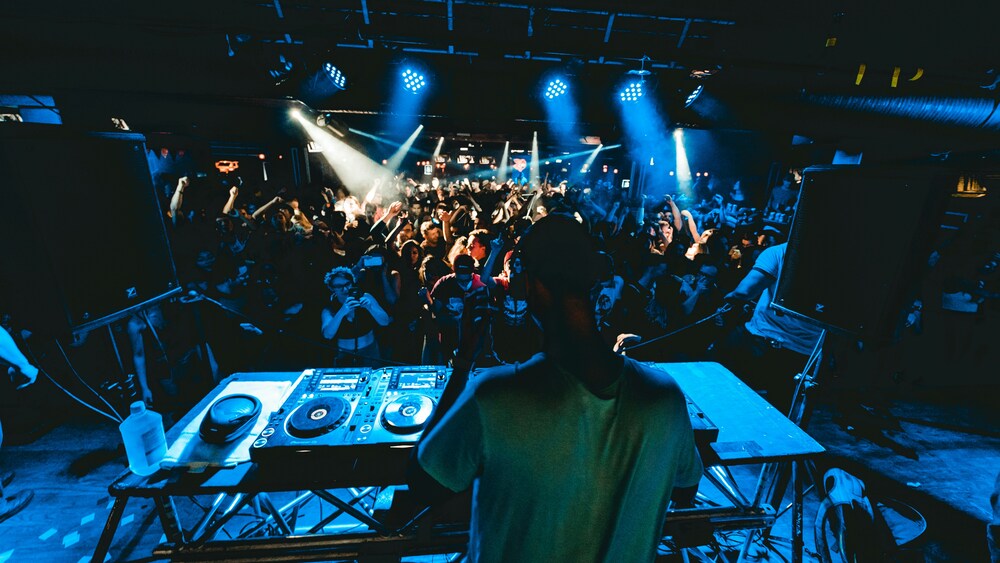
One of the DJ's most important attributes is their ability to read a room. While focusing on the music you are cuing up next is important, you also need to be aware of how the music is landing with those present.
Are people moving or standing still? Are they facing you or drifting to the bar? How are they reacting to vocals, drops, tempo changes? These subtle cues help you decide whether to stay the course, switch gears, or take things up a notch."
If the music you're playing is clearing the dancefloor rather than filling it up, then this should be an indication that you need to change what you're playing. Never be afraid to adopt a new approach if your tunes are not landing.
Get your technique on point to beatmatch your mix and flow

If you're warming up a room or just looking to build energy, then you need to consider how your selections flow and tunes sit next to each other. Try to ensure that transitions between tracks are as consistent as you can make them without 'trainwrecking' your mix.
To do this, ensure the vibe and mood is consistent instead. Keep the tempo of your selections at a similar BPM and aim to build the energy rather than letting it collapse.
Smooth transitions rely on selecting songs that complement each other, whether it's through rhythm, feel, or intensity. This is where any time practising will come into its own in helping you make the most of this.
If you are playing digitally via DJ software, use tools like Mixed In Key, Rekordbox, or Traktor for key detection. You can also use the EQs, filters, and phrasing for cleaner mixes and smoother transitions.
Pack some curveballs
Part of the role of the DJ is to help inform and inspire your audience. Of course, this depends on the setting of your set - so for example, if you're playing records at a wedding or birthday party, it's unlikely that those present will want to hear music they're unfamiliar with.
If you're selecting tunes for a club night where you're on warm up duties, then try and tease the crowd with some little-known, potential new favourites."
Doing so can show that you're tuned into the latest music releases and are unafraid to go for the weird over the well-known. As a DJ, do your diligence as a music digger and scour Bandcamp, SoundCloud and Beatport for more.
Also, pack some bangers

At the same time, you will also need some heavy hitters in your arsenal of music, particularly if you're playing a peak time set even at esoteric party.
Even the most discerning crowd will want to hear some big tunes on their night out. This will depend on the genre and musical style of the night you're playing at but inserting some party favourites into your selection can also inject some energy into a flagging dancefloor.
Try this:
Or this:
You are more than a playlist
DJs, like many musicians and artists, are now expected to use different tools as part of their job, so be adept at storytelling too with their music.
There is a reason that DJs are still in demand - as no one can put together a blend or mix like a person can - or respond in real-time to the demands and energy of those present in the room.
An important part of this is learning how to use equipment and technology to establish their own musical presence.
Be flexible and willing to adapt

The ultimate skill of a DJ is their ability to adapt to their situation, respond to the audience's needs and try and balance this by making your mark on an evening.
Either use your technical skills, tune selection or mixing abilities to keep the energy high.
If you can, always try to record your sets so you can listen back to figure out what worked and what didn't.
You should also stay sober and in control while listening to sets by some of the greats to try and enhance your skills - for example, Detroit's Jeff Mills at the Liquid Room in Tokyo from 1995. Good luck!
Move the crowd, shape the sound
If you dream of dominating the booth, dropping tracks that move the crowd, and producing beats that make people remember your name, our one-year Cert HE DJ & Electronic Music Production course will set you up for success. You’ll learn from experienced DJs, producers and tutors, exploring not only the art of mixing, beatmatching, scratching, and live performance, but also music production, business, branding and entrepreneurial skills. Along the way, you’ll gain access to professional DJ booths, state-of-the-art studios, industry-standard gear, and exclusive masterclasses, while building a network of collaborators, mentors and industry contacts that can take your music further.
Contact the team on 020 7328 0222 or via email enquiries@icmp.ac.uk and start your music career today.
Find out more
If you dream of dominating the booth, dropping tracks that move the crowd, and producing beats that make people remember your name, our one-year Cert HE DJ & Electronic Music Production course will set you up for success. You’ll learn from experienced DJs, producers and tutors, exploring not only the art of mixing, beatmatching, scratching, and live performance, but also music production, business, branding and entrepreneurial skills. Along the way, you’ll gain access to professional DJ booths, state-of-the-art studios, industry-standard gear, and exclusive masterclasses, while building a network of collaborators, mentors and industry contacts that can take your music further.
Contact the team on 020 7328 0222 or via email enquiries@icmp.ac.uk and start your music career today.