
Locations

London

UCAS code

CFTG

Start date

13th September 2027

Course length

1 Year

COURSE OVERVIEW

If your goal is to create original music for visual and interactive media, our one-year Cert HE Music for Media  provides the perfect launchpad for a career in this field. Blending hands-on music production with real-world insight into the screen industries, this dynamic course introduces you to the core techniques, workflows and storytelling approaches used by today’s composers and sound designers.

Whether you’re drawn to cinematic scoring, ambient sound design or immersive music for games, you’ll explore a broad range of creative and technical practices relevant to contemporary media. Working in professional studio environments with expert tutors, you’ll learn how to compose to picture, work with digital audio tools and collaborate as part of a creative team. You’ll also engage with a variety of roles and formats – from scoring short film sequences and trailers to experimenting with sound in interactive and non-linear contexts.

ICMP’s music for media Cert HE acts as a portfolio-building year that encourages exploration, experimentation and collaboration. During your time with us, you’ll develop your own musical identity while working across a range of genres and audio-visual briefs – which could include anything from orchestral and electronic scoring to textural soundscapes and sample-based work. Along the way, you’ll gain experience with industry-standard software and hardware, field recording and creative sound manipulation using plugins and synthesis. You’ll also begin to explore emerging technologies in music and audio, including spatial sound and immersive formats, while building core skills in areas such as programming, sync workflows and creative sound editing.

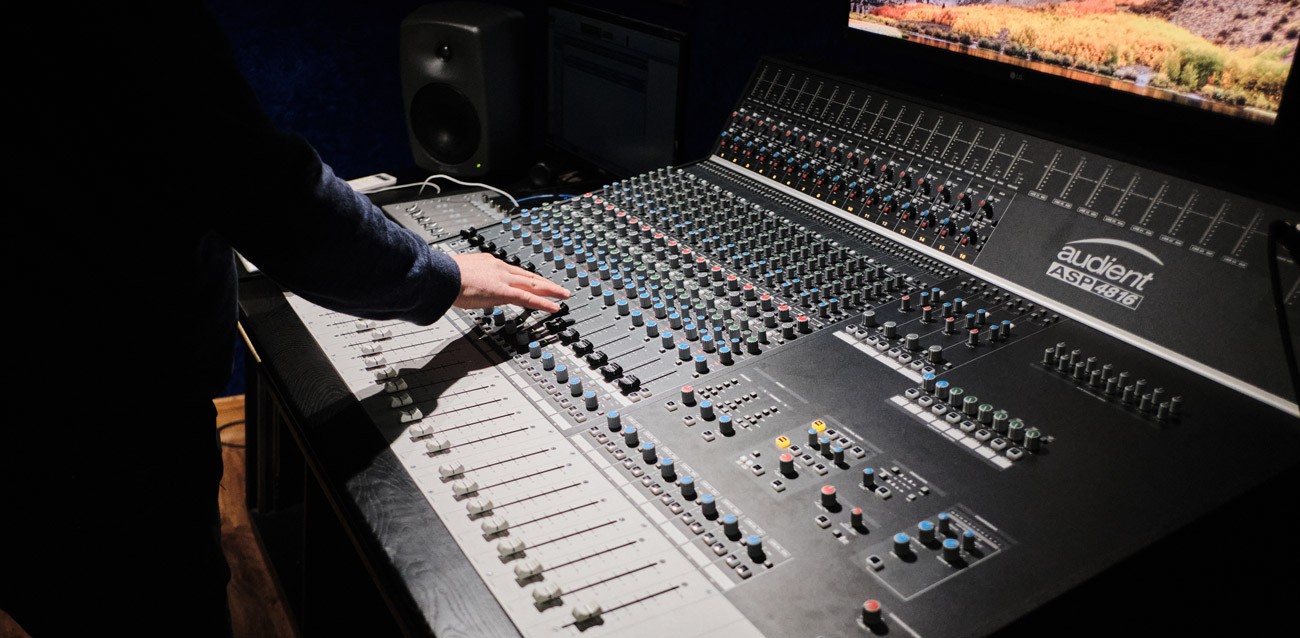
At ICMP, you’ll study in our cutting-edge Mac labs and teaching spaces, and have access to professional instruments, effects units, controllers and microphones. Facilities like our Avid S6-equipped studio are available for independent work seven days a week, helping you turn ideas into finished projects while building confidence in your creative process.

As the music for media course progresses, you’ll take part in masterclasses, connect with industry guest speakers, attend career days and gain support from ICMP’s expert tutors, who are all active practitioners in making music for film, TV and games. You can also choose to collaborate creatively with your peers on real-world industry projects, such as working to brief to compose music for TV commercials or game cut scenes.

Upon completion of the CertHE Music for Media, you’ll have developed a professional standard of technical expertise in production and composing – enough to begin a career as a sound designer, composer or producer. Suppose you decide to progress to further study. In that case, the CertHE could offer a pathway to ICMP’s bachelors degree in Music for Film, TV and Games*

*When you complete this Certificate of Higher Education, you could progress directly into year two of the degree in the same named award, because you'll have studied the same Level 4 curriculum. Progression to a different degree pathway is subject to credit mapping and academic approval before you enrol. Talk to your tutor or our Admissions team about your options.

FEES & FUNDING

Studying music at ICMP in London is great value, as well as great fun, with fees for our music courses the same as those at many traditional universities.

Course Fees: UK Students

Student Finance: Please visit our Fees page for information on accessing to Student Loans. UK students eligible for Loans are able to borrow the full course fee.

Course Fees | Programme Specification

Click to view the full terms and conditions of applying to study at ICMP.

ICMP Music School Logo

Successful completion of the Cert HE Music for Media course leads to the award of Certificate of Higher Education by The Institute of Contemporary Music Performance.


Experience ICMP at an
Open Day in London

Meet our team, learn more about this course and the many benefits of studying at ICMP, tour our incredible facilities and get all of your questions answered.

You can also join an online event or book a personalised tour.

Book here


Want to Join in September?

Great! Start your application by completing this short form and we'll guide you every step of the way.


Key facts

  • Compose original music for film, TV and games across this practical one-year media music course.
  • Develop creative, technical and collaborative skills in a screen-focused music environment.
  • Explore sound design, post-production, music supervision and more.
  • Gain hands-on experience with field recording, foley and synthesis.
  • Work with industry-standard production tools and studios like Avid S6.
  • Explore DAWs and learn to produce ‘in the box’.
  • Collaborate on real-world briefs and build your portfolio.
  • Learn from working professionals in screen music and audio.
  • Study in ICMP’s high-tech studios with professional gear and software.
  • Upon completion, launch your career as a composer, music supervisor or sound designer or progress to Year 2 of ICMP’s BA (Hons) Music for Film, TV and Games degree.

    Apply Now

UCAS CODES

COURSE DETAILS

COURSE MODULES

Across ICMP’s one-year CertHE Music Production for Film, TV and Games course, you’ll be introduced to the art, craft and theory of creating music for multimedia projects. Over six carefully curated modules, you’ll become proficient at using industry-standard tools, start to develop your professional identity as a composer and build a portfolio showcasing your potential as a screen music creative.

DAW WORKFLOWS FOR MEDIA PRODUCTION

In this module, you’ll receive a thorough introduction to industry-standard Digital Audio Workstations (DAWs) for music production in visual media. Across this highly practical unit, you’ll examine the creative and technical potential of DAWs, addressing workflow optimisation, signal routing, processing techniques and industry trends. Working with sample libraries, plugins and recording tools, you’ll develop a strong foundation in digital music creation, learning to produce professional-quality audio content. Beyond composition, you’ll explore the broader scope of audio production, including designing, implementing and integrating music and sound within a media context.

  • Session management and workflow
  • Curating and editing for music and media
  • Audio recording
  • Plugins and FX
  • Music supervision and the role of the music editor
  • Podcast creation

MUSICAL LANGUAGE AND TECHNIQUE

Through applied music theory, critical listening, appreciation and structured analysis, you’ll explore how music functions as a language in this module. You’ll examine a range of genres and styles, developing an appreciation for their influence, before applying your new knowledge to your own creative compositions. Across a series of workshops and production exercises, you’ll combine both theory and practice to discover the technologies and workflows used in contemporary music writing.

  • Essential music creation skills
  • Form and function
  • Melody, harmony and rhythm
  • Narrative function
  • Bridge theory and practice

ENVIRONMENTAL SOUNDSCAPES – CAPTURE AND CONTEXT

Through this module, you’ll explore field recording methods and problem-solving techniques to develop skills in capturing and manipulating audio from both urban and natural environments. While primarily a practical module, you’ll also study sound theory, deepening your understanding of the everyday sonic environment and its potential for unique compositions. As you progress your learning, you’ll gain the knowledge to create a diverse sound library that will support your future creative projects and form an impressive audio portfolio.

  • Field recording
  • Listening theory
  • Synthetic vs natural soundscapes
  • Environmental sound art
  • Introduction to reflective practices
  • Academic research skills

STUDIO RECORDING FOR MEDIA COMPOSITION

This module introduces you to the fundamental principles of studio recording and production, building on your existing DAW skills. Working both in and out of the studio, you’ll capture and process audio for media by recording live instruments and exploring key studio workflows such as audio routing and working with outboard gear. You’ll move between the studio environment and ‘in-the-box’ workflows, developing adaptability across a range of production contexts.

  • Practical recording sessions
  • Industry-standard DAWs and workflows
  • Microphone types and techniques
  • Studio signal flow
  • Audio FX

MUSIC AND THE MOVING IMAGE – SHORT FORM

Across this module you’ll cover the principles, techniques and creative approaches involved in composing and producing music for short-form media such as commercials, trailers, idents, promotional media and source music. Taking part in applied learning underpinned by theory, you’ll explore how music in condensed formats can enhance storytelling, branding and emotional impact. Through practical compositional tasks, technical skills development and the evaluation of industry practices, you’ll experiment with scoring approaches, develop

music to industry briefs and create impactful compositions. You’ll also get to grips with a range of industry-standard tools, learning how to create music to picture in a fast-paced and commercially driven environment – all while developing an audio portfolio to be proud of.

  • Diegetic music
  • Music production workflows
  • Spotting sessions
  • Structural mapping
  • Composing to short-form picture (trailers and adverts)

SOUND WORLDS – SYNTHESIS, SAMPLING AND GAME AUDIO

This module introduces you to the creative and technical foundations of sound design, with a strong emphasis on synthesis and its application across multiple media formats including games, film and TV. By exploring synthesis, sampling and audio theory, you’ll develop a fundamental understanding of sound design principles, learning how audio shapes our perception of visual media. Through a series of practical exercises and critical listening tasks, you’ll discover how sound interacts with the moving image while exploring the ways humans perceive and respond to sound. Examining how sound operates in both linear and non-linear environments, you’ll explore the limitations and stylistic characteristics of a range of audio sources, while also investigating key concepts in 2D and 3D sound and interactive audio. Combining creative experimentation with technical skills development, this module will encourage you to think critically and practically about sound’s role in immersive and interactive media. By the end, you’ll be adept at producing original audio content that enhances the emotional and narrative impact of a wide range of media forms.

  • Fundamentals of sound design
  • Synthesisers and key synthesis methods
  • Sampling
  • 2D and 3D sound
  • Music loops
  • Sound FX
  • Introduction to immersive and interactive media

Teaching and Learning

You will be taught from our campuses in Kilburn and Queen's Park, utilising our live rooms, tech suites and in-house music studio facilities as well as classrooms and lecture rooms. You will have access to use these facilities outside of class time while you are a student at ICMP in order to rehearse and record your music. 

You will be taught through a variety of teaching and learning methods including lectures, small group tutorials and music technology workshops. 

You will have access to the Student Services Department for support and advice concerning welfare, finance, personal development, safeguarding and more. You'll also have access to our Professional Development team ‘The Careers and Industry Team', who provide bespoke music industry careers advice and access to unique industry opportunities.

Teaching and Learning

On the CertHE Music Production for Film, TV and Games programme you will be taught through a variety of lectures, seminar, workshops and demonstrations.

When not attending lectures, seminars or other timetabled sessions you'll be expected to continue learning independently through self-study. Typically, this will involve reading articles and books, working on individual and group projects, undertaking research in the library, and preparing coursework assignments.Your independent learning is supported by a range of excellent facilities, including our Learning Resource Centre, our many performance and practice rooms, and well-equipped tech suites.

You'll be in timetabled teaching activities such as lectures, seminars, practical classes, online content and workshops for typically 10-12 hours a week.

ASSESSMENT

Your knowledge and thinking will be assessed through reports, workbooks, presentations, essays, examinations and recordings. Your practical skills will be assessed through recordings, performance, composition and practical examinations, and your skills for life and work will be assessed through project pitches, coursework and presentations.

The assessment breakdown of this programme is:

17% Written | 33% Practical | 50% Coursework

ENTRY REQUIREMENTS

Applicants will typically have A levels, BTEC Diploma or Extended Diploma, International Baccalaureate equivalent to 48 UCAS points, or an ICMP Higher Diploma.

In addition, you should hold a GCSE Grade C or 4 or above in English, or suitable equivalent, such as Level 2 Key Skills, Functional Skills or Adult Literacy/Numeracy.

We also welcome applications from mature applicants who may have no formal qualifications but can demonstrate their suitability for study through appropriate skills and experience.

Please note: International students, who require a visa to study in the UK, are not eligible to study on this course. Instead we encourage you to apply for either our three-year BA(Hons)  Music for Film, TV and Games degree.

All applicants will be invited to attend an audition.

UCAS code CFTGUni code i25

HOW TO APPLY

 Please apply via the "APPLY NOW" link below.

At any time during the application process if you need help or further advice just contact our Admissions team who will be happy to assist you. 


By phone:
020 7328 0222

By email:
enquiries@icmp.ac.uk

or