

Interview | Natasha Hendry
Our Music Psychology in Practice Programme Lead shares more about the course and the opportunities studying opens up.
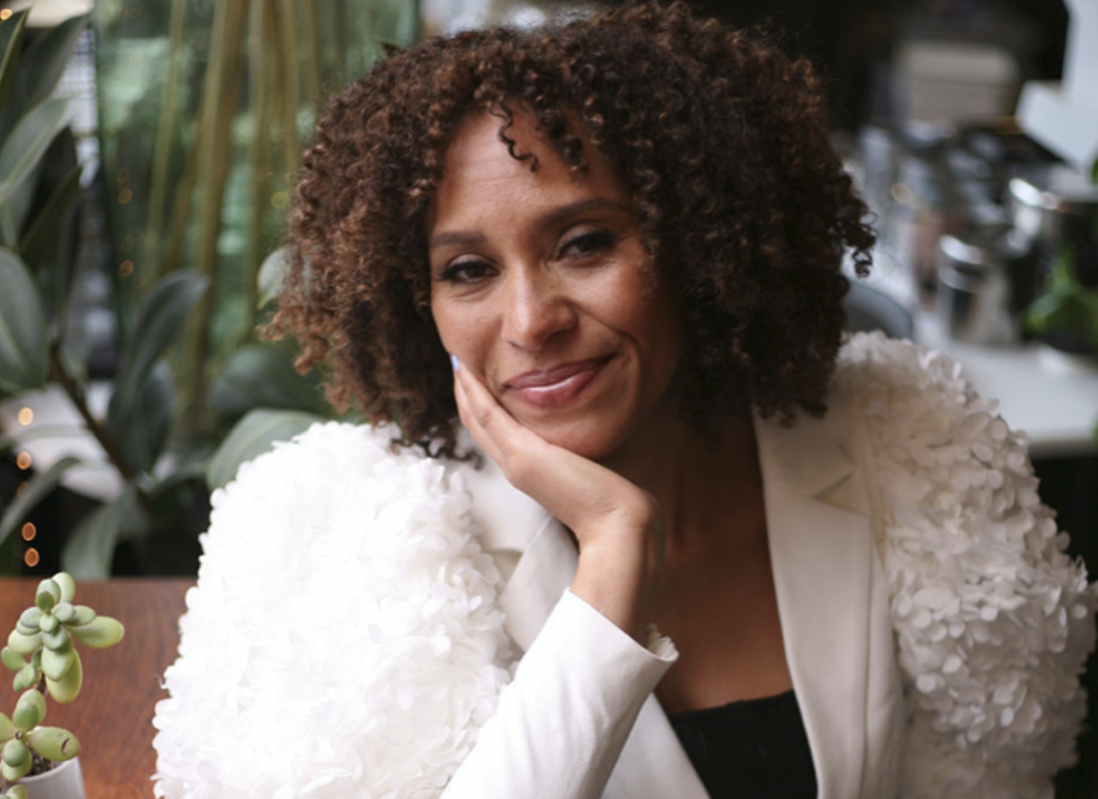

As a music psychologist, researcher and singer, ICMP’s Music Psychology in Practice Programme Leader Natasha Hendry works at the crossroads of multiple disciplines.
The course is the latest development in her connection with ICMP where she has been an external consultant in recent years.
As well as the course and Natasha’s PhD, her career has seen her previously sing with dance act Chicane while she continues to perform and lead a choir.
We caught up with Natasha to learn more about ICMP's course, the doors it can open and her practice and research.
How did you become involved with ICMP?
Before being on staff and working on the programme, I’ve been working with ICMP for a number of years as an external consultant, doing a lot of work around EDI and helping them put together their new academic and learning strategy.
I’ve run a five-month racial literacy course for staff and been on some of the validation and revalidation panels as an expert on decolonising the curriculum.
We’ve had an ongoing relationship and ICMP has been really keen to embed inclusivity and decolonised principles into its courses. One of the things I’ve often said is how programmes should be built like this from the start rather than retrospectively adding this element in. For me, this is the best way to serve students and ensure everyone is included.
My ambition has been to show how easy it is to do this, and to be part of an institution brave enough to adopt this approach too.
How did you become involved in this degree?
My interest in music psychology was something that the team was aware of, there was a decision made to branch out and add it to ICMP’s portfolio of courses. Then I was privileged enough to be asked to write the course.
I’ve written the degree so it was an opportunity to not only bring an exciting new subject to ICMP - music psychology is an excellent field with so many avenues to engage with music alongside multiple career paths - but also a chance to build a programme from the bottom up with these decolonised principles, inclusivity, and Culturally Relevant Pedagogy - all of this makes up a thread that runs through it."
Initially, I was asked to write the programme, then I applied to lead it and was really excited to secure the role.
How long has the build up been around launching the course?
It’s been a year in the making so relatively quick and these principles of decolonisation are really at its heart. The idea was to communicate with communities that are actively involved in this field while also consulting and finding out how we can feature the students’ input and cater for them.
This is also one of the first undergraduate music psychology programmes in the UK. They usually tend to be Masters and I think this has been a bit of an oversight, a lot of people come to music psychology at postgrad level so they either have experience in music or in psychology, it’s hard to get both at undergraduate level.
This course represents a real opportunity to train people for careers in this field and help them ready themselves for further study.

How have you structured the programme and what careers will students follow?
It’s a practical programme, you can’t avoid the theory but it is called Music Psychology and Practice for a reason. When you learn core theories and frameworks, we’re constantly showing how you would apply them in the real world. So our staff and guest lecturers are those actively working in the field.
It’s structured so at Level Four students are exposed to the theories and core ideas around music psychology. This training can lead to many, many different careers. Music therapy is something it could be a stepping stone towards but it is a very distinct qualification - you have to be registered and there is further study you need to engage in before you can call yourself a music therapist. There’s also the wellbeing industry too alongside a strong social justice thread so I’d expect people to go and work in policy or alongside organisations that work with youth or serve people with particular characteristics or identities.
One of the partners I’m hoping to work with is Music Support, they are a huge charity that offers support to musicians. We're hoping that people realise that there are so many different fields as part of this - education, the community aspect as well as the business side. Many of these projects involve funding and grant writing so there’s a whole module around this too.
Level Four is about exposing students to this world, Level Five is about starting to practice it, then at Level Six it’s about acting independently and applying what you’ve learned. Part of our aim is to build partnerships where we can provide students with the chance to work in these different settings.

Has this field been rapidly evolving in recent years?
Yes it definitely has, there’s much more interest in it.
We have so much more awareness about the need to put in place a scaffold around creatives in terms of their mental health and wellbeing. Music is a very particular industry with unique challenges and pressures. In the past, it’s been like the Wild West where people just need to get by. Now, it’s the responsibility of institutions to teach people how to do music well but also how to be well."
I think we’re increasingly realising this so there’s more of a spotlight on its importance. This programme is about two things - raising awareness of this and also researching and exploring how we can support others in terms of their wellbeing as well.
How is the course feeding into your own practice and research?
I’m coming to the end of my PhD in music psychology that I’ve been studying for the last four years. My research is focused on how our music education system tends to be predominantly middle class, is seen through a white racial lens and very standardised. For those that don’t fit into this, what does it mean for their behaviour, identity and further aspirations to go onto more study or careers?
So I’ve been studying how young Black people experience music education in the UK and developing a racially literate framework for formal music education.
For me, I worked for 30 years as a professional singer in the music industry too. So being in it and part of the industry, I saw these pressures and the lack of help. Moving into psychology, then music psychology really gave me a hunger to want to support my own if you like. I retrained in it and specialised in music education and wellbeing while I also run a community choir.
I think we sometimes see the industry as being the performers, the songwriters, the producers and those at the labels. But there are so many unsung heroes, the mental health support, those that go into care homes and work on music with elderly people, or who are working on making accessible music instruments for disabled children. That is still the music industry and this course is aimed at thinking about the industry much more expansively, understanding who are the people that use music and make music, feel music and change lives with music - this is what the course is about and my own research journey.

Who else is on board in teaching the course?
We’re still recruiting but Jane Harris, who does a lot of academic support for students, she also has a masters in music psychology, so she has been a very welcome addition to the team, then Lucy Barker who studied music and songwriting here a good few years ago at postgrad level is with us too. She has done plenty of research into this area, how to process trauma and songwriting. She’s also teaching and heading up a module.
There are a variety of experts in the field who have been friends to the programme, consulted and helped us deliver this.
We’ve already had some great guests, Dr Kate Wareham, CEO of the Choir with No Name, so the choir that works with those who have experienced homelessness, then experts on music and dementia. It’s built from those who are working in the industry.
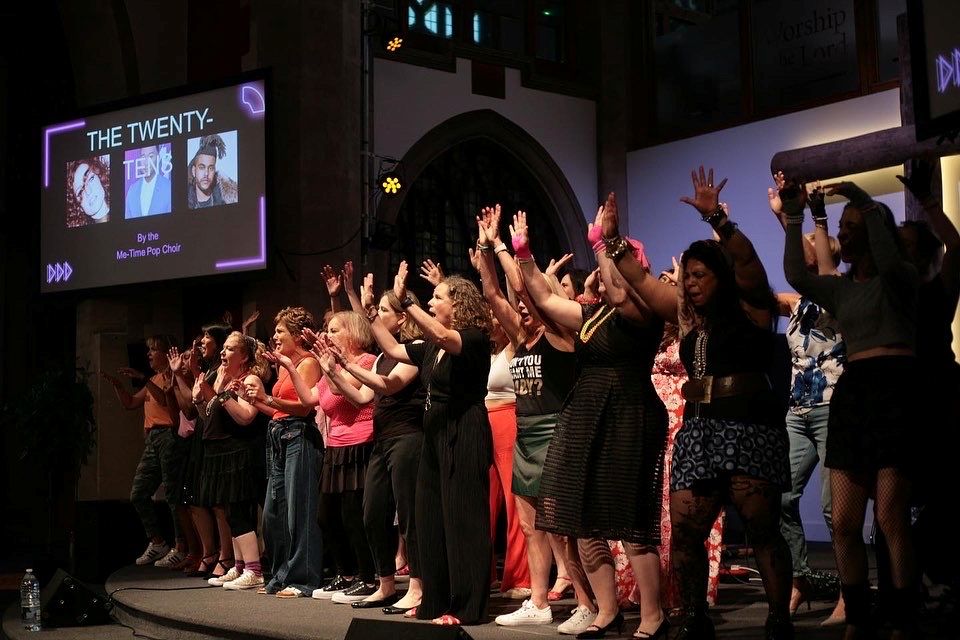
How did your Me-Time Pop Choir begin?
I was a touring singer for many years, then when I got pregnant with my first child, it wasn’t conducive to being on the road. As a result, I had to rethink what I was going to do. I was also a vocal coach at the same time, one of the things I would always see as a vocal coach in the practice room would be music and singing, how it would unlock something for people.
When I was having this identity crisis as a mum, I suddenly decided it would be good to retrain in psychology so when I’m teaching, I know a bit more about how to help and support people.
I retrained in psychology, then I suffered postnatal depression. I knew I had to get out of the house so started going to these mum and baby groups where you’d sing baby songs. I started thinking it would be better if the songs were for the adults, not the babies."
So I set up this choir for parents to come and sing. I hired a community hall, we’d put our babies in the middle of the space and we’d sing together - it was total carnage, but we had a really great time, this was the first time I’d seen how powerful music could be.
It ended up being an evening choir and some of the original mums are still part of it - it’s become a community initiative where we perform at events and do fundraisers too.
Connect with Natasha | Website | Instagram | Me-Time Pop Choir
Photo credit | CK Goldiing
Study Music Psychology in Practice
Whether you pursue direct music psychology jobs, investigate emerging roles or build a portfolio career of multiple music psychology side-hustles across different sectors, our Music Psychology in Practice degree equips students with a host of versatile and in-demand skills.
If you’re interested in seeing exactly how these skills are taught, feel free to ask ICMP’s Admissions Team for more information about the course.
View the course
Whether you pursue direct music psychology jobs, investigate emerging roles or build a portfolio career of multiple music psychology side-hustles across different sectors, our Music Psychology in Practice degree equips students with a host of versatile and in-demand skills.
If you’re interested in seeing exactly how these skills are taught, feel free to ask ICMP’s Admissions Team for more information about the course.