
Interview | Hugh Richardson
We caught up with our bass alumnus to learn more about his time at ICMP and how he has developed his career and online community.
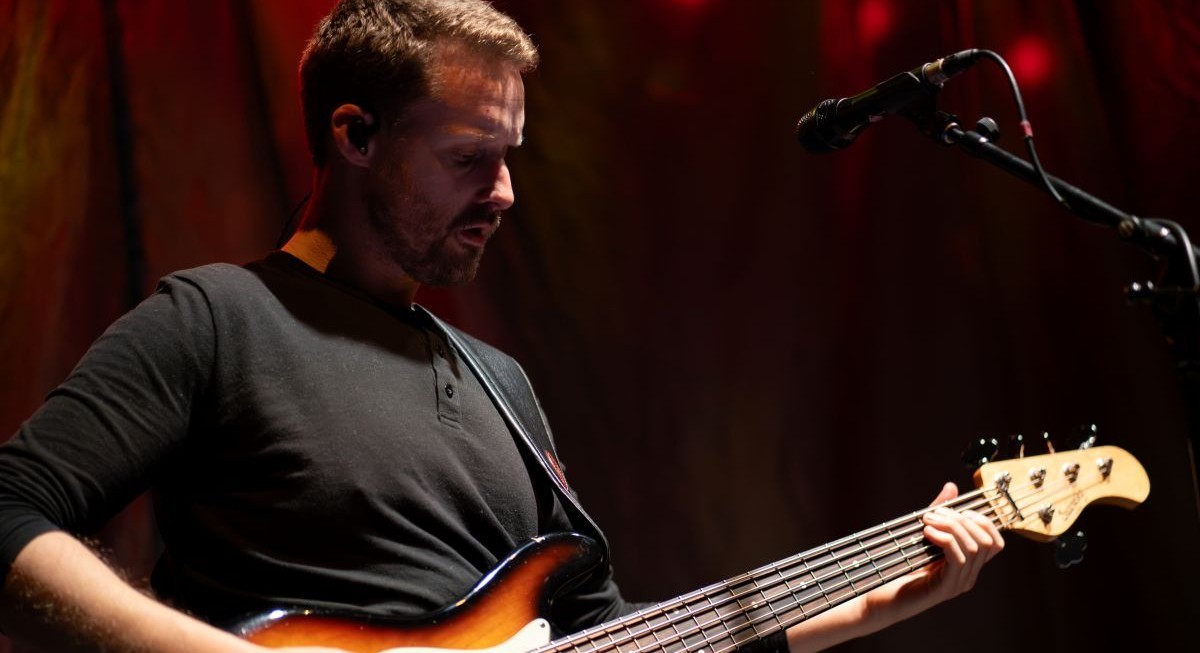
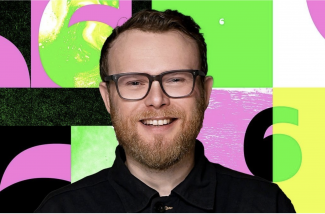
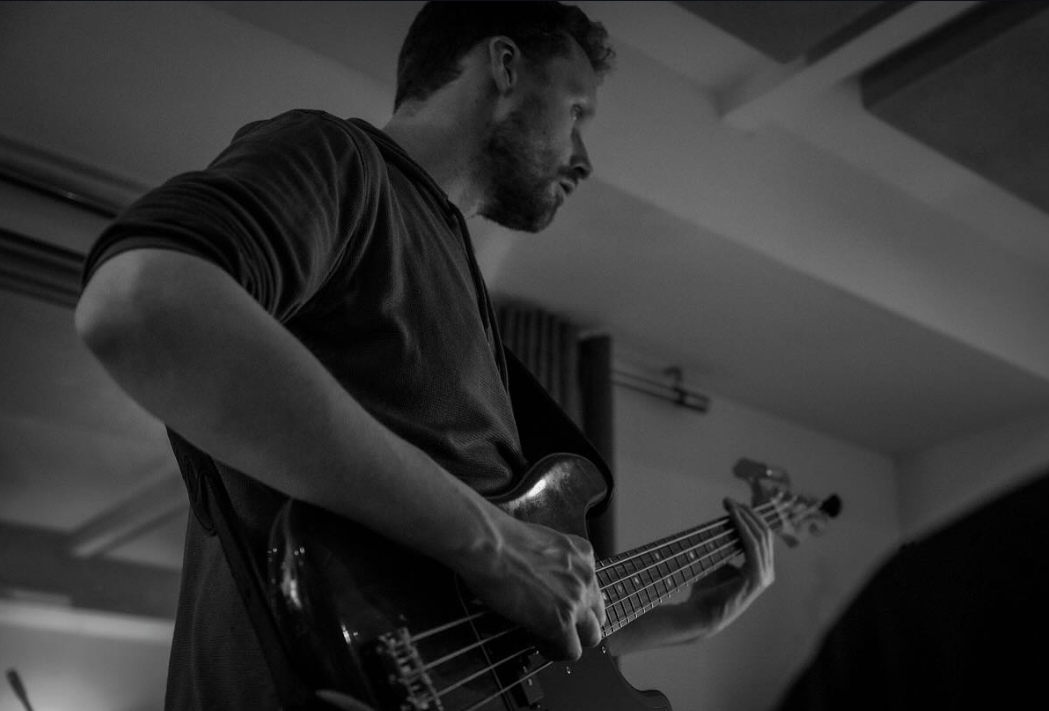
From a successful YouTube channel to West End shows and working as a musical director for Vince Freeman, ICMP bass alumnus Hugh Richardson is living a rich and varied musical career.
While he's busy in the studio and on stage, his YouTube channel is gathering traction with an audience of almost 40,000 subscribers hungry to hear his insights on how to get the most out of the bass and navigate the industry.
We caught up with Hugh to find out more about his time studying bass at ICMP and how he has developed his career.
What led you to study at ICMP?
Dave Marks was probably the biggest influence on that decision for me. I met him when I was about 14 and while I really loved how seriously he took playing, he also talked a lot about musicianship and how to make bands actually sound better rather than just how to play the bass.
From there I took one of the summer courses at the old Acton campus when I was 15, and began private lessons with Dave a year later.
I felt there was much more of a focus on being musical than being an instrumental player and the bass faculty at ICMP really encouraged this so it felt like a really natural progression studying there.
And I've always felt that I was lucky to be there at the time I was. ICMP had just moved to Kilburn when I started my first year so we had total use of the facilities almost 24/7.
There weren't many bass players there so we all doubled up and took extra performance classes. Sometimes I'd have an extra 15 hours of classes a week on top of our regular ones but I gained so much experience.
We'd have lessons with people like Dave Marks, John Currie, Alan Mian, Paul Scott, or Terry Gregory and learn a lot but then we'd have all these extra hours of performance time with tutors from other instruments to apply all this.
Having that extra time with people like Chuck Sabo, Dario Cortese, Emer McParland, Martin Goulding, Holger Skepenheit, Chris Newland or Darren Ashford taught me so much about what other band members needed from me as a bass player. And I got to know all the students which was great for building a network.
What were the most important things you learned during your studies?
I think the most important thing was how honest the faculty were about the reality of working as a musician and what that would require of me. If I had to sum it up in a few words it would be pragmatism and work ethic.
The faculty were really adamant about not bringing standards down or making things easier for us and whilst it felt tough at the time, I look back certainly at the first few years and realise that I made so much progress because the faculty enforced these standards and didn't let them slip."
I saw that a lot both inside classes and outside when I began to work. I was criticised a lot but I learned that, contrary to what a lot of people say, you really should listen to people when they criticise you because, if they can genuinely point out a flaw or weak point in your playing, then that's what you need to work on.
For example, I began playing with guitar tutor Tolis Zavaliaris in his band. We played his original music which was Greek music fused with rock, prog, and jazz and it was totally alien to me.
I had never played music with such complex time signatures before, and I had no clue about all the Greek scales and tonalities that Tolis wrote with.
However, Tolis helped me to understand that music a lot without ever making things easier for me. I was never really treated like a student in that band. He expected a lot and that really helped me in the long run. I feel like this really shaped a lot of how I hear and approach playing to this day.
I'd love to know about how you started your industry journey?
As a bass player, I did wedding gigs, bar gigs, some small theatre jobs, or local big bands but I also worked as an assistant for two of the most important tutors I had at ICMP. Maurizio Malagnini who taught film composition, and Audrey Riley who taught arranging and orchestration.
Whilst I never worked in a creative capacity for either of them, I was lucky enough to go to recording sessions with them and I got to see exactly how high the standards for session musicians are when they work at the highest level and it really changed my outlook.
The jobs I did were small but it really mattered whether I did a good job. I never wanted a session to be held up because I'd done a bad job making a click track for example.
It was a lot of pressure at the time but having that and the worry of real world consequences was actually a great learning curve for me.
It made me realise that you really do have to do the work and take responsibility for your own development if you want those kinds of jobs, and if you want them to go well.
Other people are taking a punt on you after all so working hard is the best way to repay their faith in you and I also think it is the best way to be grateful for the opportunity you've been given.
Ultimately, when the calls do come your way, you have to be prepared to put yourself in situations you're not comfortable with in order to keep growing and developing.
What do you think the secret is to be an effective musician for hire?
Being a musician is an incredibly rewarding job but at times it can also be incredibly tough but that's nothing to be scared of and I think being willing to really tackle the "tough-ness" of the job is the secret.
It's really easy to believe your own hype once you have some gigs under your belt, or good names on your CV but the moment you start looking ahead to gigs and skipping prep because you think "this song is easy" then you're in trouble.
Being a good musician for hire isn't about things being easy or hard, it's about being prepared.
Don't get me wrong, that doesn't mean that things will always go your way. Sadly, difficulty and taking a few knocks is unavoidable. However, just accepting that things will be tough and getting to work is really important.
Plenty of people will say that who you know is the most important thing for working, and that's true, but if your playing isn't in good shape and you don't know how to prepare you'll always struggle.
I like to say that good playing and good prep is like getting your food on a clean plate when you eat out. No one compliments the clean plate because they take it for granted and the same needs to be true of your playing as a professional musician."
In the eyes of your clients they are hiring a professional so they will take it for granted that you can play. However, if your playing isn't up to scratch, then no amount of good connections, CV names, or great sounding bits of gear will help.
Those things are all important but for me, they always come second to great playing and a good work ethic.
What have been your career highlights in terms of studio or live work?
I've been very fortunate over the years to be involved in some great projects.
Recently I've started depping on some shows with Brian McFadden and Keith Duffy's touring show BoyzLife which is a mix of WestLife and BoyZone hits. It's been a real pleasure to fill in for the main bassist Dan Ezard on those.
In the past I've done some great live shows with Rachel Zegler, Lea Salonga, Aaron Tveitt, Jeremy Jordan, Ramin Karimloo, Titus Burgess, and Samantha Barks at places like the London Palladium and the Royal Albert Hall which was amazing!
I had the chance to originate the bass chair on a West End Show, 'Bat Out Of Hell: The Musical' which has been going for almost ten years now.
We spent about 18 months in the West End, recorded a cast album, and from there we’ve toured all over the world doing two UK tours and even playing arenas in Europe, Australia, and New Zealand.
But I also work as a bassist and musical director for touring and recording artist Vince Freeman. We've recorded some great songs together which have been played on BBC Radio 2, and supported artists including Van Morrison, Scouting For Girls, BoyzLife, Heather Smalls from M People, and Tunde from Lighthouse family.
I just feel very grateful to have had those opportunities.
I'm also very interested to hear more about your YouTube channel - what led you to launch it?
I'm a big advocate of musicians creating work for themselves because I really believe that it's much easier to create work than it is to get work and the aim of the channel was really to build up my teaching.
It's really kicked on in the last few years and it's been great to bring some of my live performance experience into the videos so whilst it started mostly as a way to build up private teaching, it's become a nice way to blend live work, studio work, and teaching into one resource that bassists can learn from.
And how have you gone about growing a community around it?
The best way is to really try to learn who the people are that are watching your videos and learn more about what they want to see.
When I first started I did the classic videos of how to play scales, or how to learn technique which was fine but I eventually found out that most people wanted to know more about how to apply theory or technique to real music.
Changing my content to bring in some experience and insights from my live playing career and it was the best decision I ever made for the channel and surrounding community."
All of a sudden I'd get comments from people who were coming back each week to watch every new video because they felt they were getting something unique that really spoke to them.
Then from there it was much easier to grow an email list and a private teaching practice.
The best way is to really understand who is watching your videos and to stop trying to use 'algorithm tricks' that so many videos say you should use.
The fact is that if you make your content relatable to people, it will find them. And you may not always get a load of views but it’s not about that. The quality of the view is really what counts.
Connect with Hugo: Instagram | YouTube
Photo credit | Main image | Sam Abbott | Black and White image | Elliott Davis
Shake rooms and arenas with your Bass
As a bassist, you’ll know that mastering the four-string is harder than it looks – but at ICMP, we’ve been training the best for over three decades. You’ll get to lock in with a faculty of top-class tutors, learning not only the secrets behind a great groove and performance, but also the business, music theory, production, marketing and additional skills you’ll need to get noticed. As an ICMP student, you’ll also join a community of new collaborators, friends, and industry contacts – and access our amazing rehearsal rooms, gear, masterclasses, industry events, and recording studios.
To start your music career today, email our friendly Admissions Team at enquiries@icmp.ac.uk or give them a call on 020 7328 0222.
Bass courses
As a bassist, you’ll know that mastering the four-string is harder than it looks – but at ICMP, we’ve been training the best for over three decades. You’ll get to lock in with a faculty of top-class tutors, learning not only the secrets behind a great groove and performance, but also the business, music theory, production, marketing and additional skills you’ll need to get noticed. As an ICMP student, you’ll also join a community of new collaborators, friends, and industry contacts – and access our amazing rehearsal rooms, gear, masterclasses, industry events, and recording studios.
To start your music career today, email our friendly Admissions Team at enquiries@icmp.ac.uk or give them a call on 020 7328 0222.