
A History of London Nightclubs
Dive into London's wild and wonderful nightlife history...

London is synonymous with life after dark with some of the world's most iconic nightclubs opening their doors in the city.
Over the decades, the metropolis has led the way in being a playground for DJs, promoters and party people with many late night spots acting as important hubs for music scenes, artists and producers to gestate and grow.
Without spaces such as the Ministry of Sound, Fabric or Plastic People, London would be significantly less colourful and devoid of the thumping, bass heavy soundtrack that courses through its veins.
Of course, London's nightclubs have always faced challenges - and over the years great clubs have come and gone.
From exploring the city's nightlife's history, what is clear is the fearless way in which club owners have managed to keep the party going in the face of daunting obstacles."
It's the ability of these savvy venue owners, promoters and DJs that the scene has stayed locked on the future and kept London's electronic music moving forwards.
Here's an overview of some of the key moments, spaces and scenes from London's nocturnal history…
Early nightlife
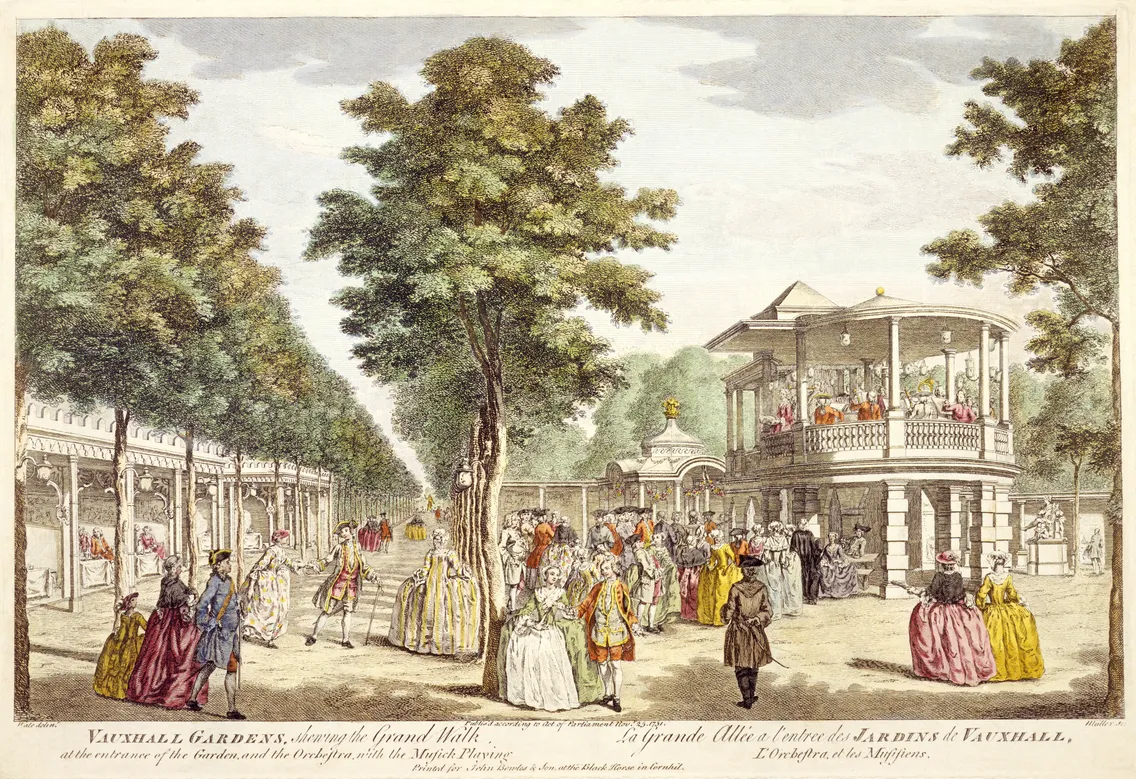
Vauxhall Gardens photo credit | London Museum
Nightlife has long been and continues to be a way for people to escape the worries of the working week. One of the earliest examples of this form of entertainment was the Vauxhall Gardens which offered a diverse range of activities for visitors back in the 18th Century.
"It was a place where the glittering world of wealth, fashion and high culture showed off its seedy underside; where princes partied with prostitutes, and the middle classes went to be shocked and titillated by the excess on display," wrote curator Danielle Thom as part of a series of Museum of London articles.
Although there were other pleasure gardens in London, the Vauxhall location was the most well known and featured in the Netflix hit, 'Bridgerton'. These were enclosed outdoor spaces where visitors would pay to enjoy summer evenings eating, drinking and taking in shows and performances.
At the same time, Soho was also gaining a reputation for its entertainment, drinking dens, concert halls and sex industry with more brothels believed to have been located here than anywhere else in London.
1920s | Jazz Age and '43
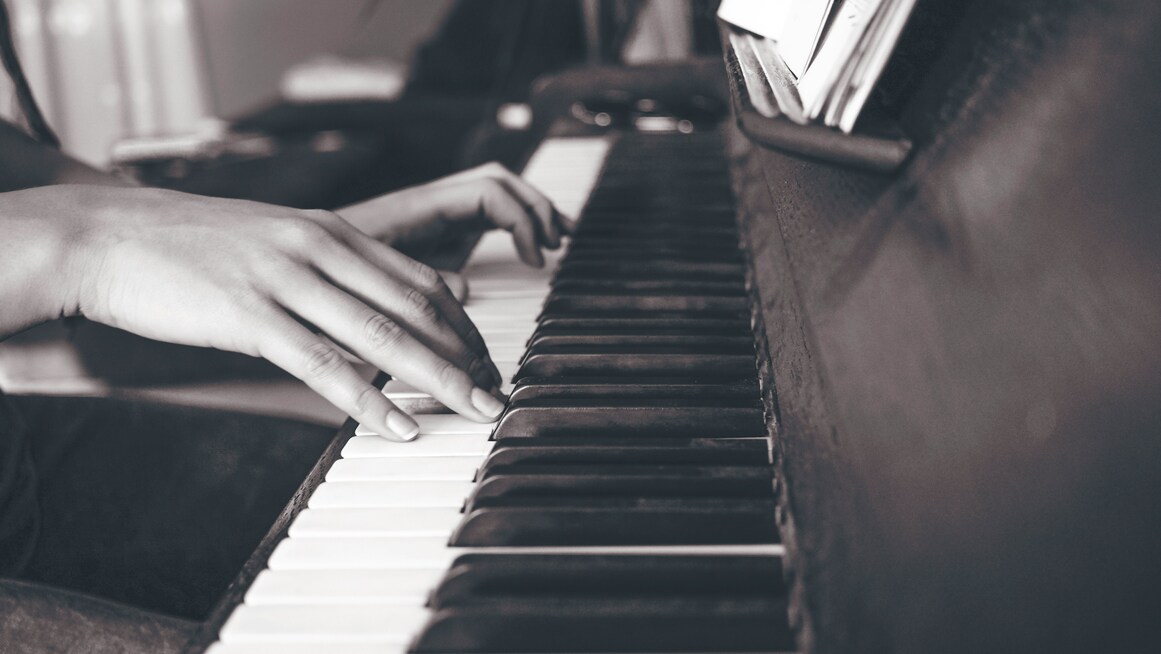
Deep in the heart of Soho, at 43 Gerrard Street, was a small, intimate nightspot known simply as '43.
Kate Meyrick was the owner who also ran several other nightlife spots - the Silver Slipper in Regent Street and the Manhattan in Denman Street. '43 is perhaps her most famous and became an institution, known for its vibrant, sometimes illicit, atmosphere and clientele ranging from criminals to those from the higher echelons of society.
In the post-war years, a plethora of jazz clubs opened their doors in and around Soho. Among them was the Shim Sham on Wardour Street, a club known for its inclusive welcome for Black musicians and the LGBTQ+ community.
According to Historic England, the Shim Sham "opened as a 'bottle party', a type of members club that got round licensing restrictions because customers would ship booze in from late-night wine shops".
1950s/1960s | The Astor, Ronnie Scott's and Madame JoJo's
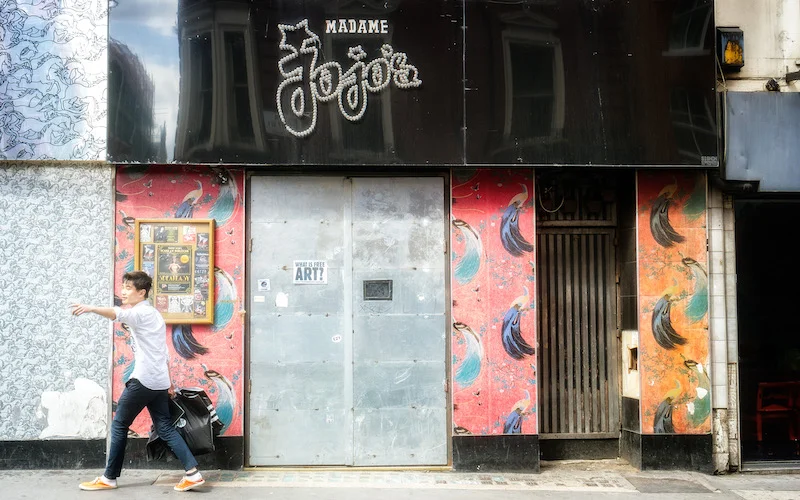
Madame JoJo's photo credit | IQ Magazine
The Astor Club in the fifties and sixties hosted famous singers like Shirley Bassey and Tom Jones, and even saw the Krays extort protection money in its premises in Mayfair. The Astor's clientele reflected a mix of established and up-and-coming performers, as well as figures from the entertainment and criminal worlds.
Ronnie Scott's was the world famous jazz club that opened its doors in 1959 on 39 Gerrard Street in London's Soho before moving to its current location on 47 Frith Street.
The swinging sixties was known for its vibrant mix of music, fashion and culture as the shadows cast by conflict during the first half of the century began to slowly retreat. Bands like the Beatles, the Kinks and the Rolling Stones all exploded during the decade and a love for live music was informed by the simultaneous rise of DJ culture too.
Out of the Mod scene grew a love for soul, funk, r'n'b, ska and more, played at spaces including the Flamingo on Wardour Street and the Marquee, another Soho venue that welcomed performances from bands including the Yardbirds, the Who and Jimi Hendrix."
Some other iconic spots included:
Madame JoJo's
Madame JoJo's opened its doors at the start of the sixties and was reborn as a cabaret venue by porn entrepreneur Paul Raymond in the eighties.
Dark and sometimes seedy, the venue encapsulated everything that was exciting and fun about Soho during its lifespan and was a home for a rich variety of events and party goers. Speaking to the Guardian after its closure in 2014, Marcus Harris, who co-ran the venue's long-running indie night White Heat, described it as "a community of fringe culture".
The club's licence was suddenly lost in 2014 after a "serious incident of disorder" outside the venue where a police report detailed how bouncers had to fight off an unruly mob with baseball bats. Many of those unhappy with the ruling derided it as an attempt to gentrify the area.
The Four Aces
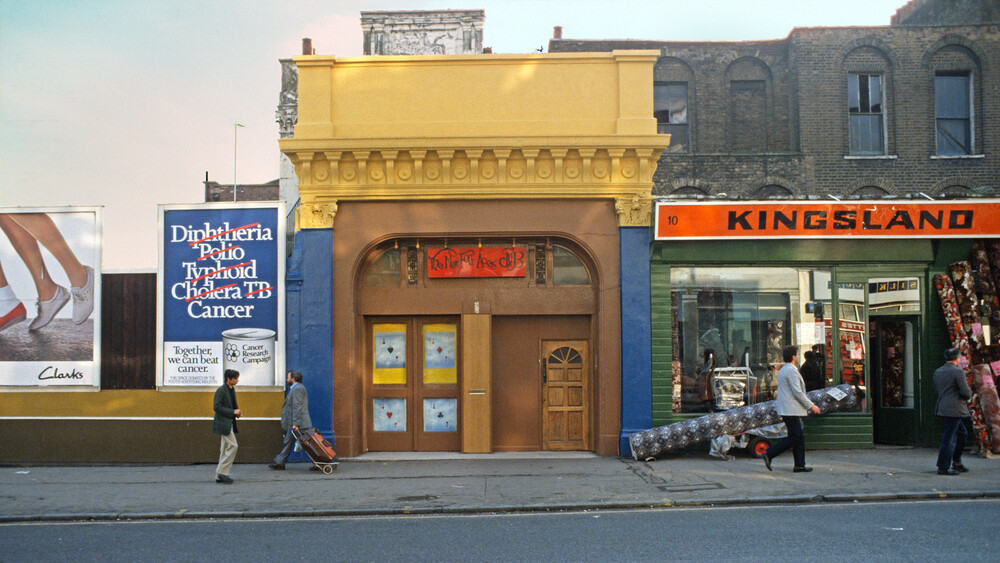
The Four Aces photo credit | Flickr
In what was, ostensibly, a more innocent, pre-gentrification time for Dalston, the Four Aces was the area's flagship club that opened in 1966.
The Aces could be found on Dalston Lane in Hackney's pre-hipster days where it was a home for Black music of all kinds. Rave promoters Labyrinth also utilised this space during the late eighties for their parties.
Among many of the high-profile artists to appear in the club include the Prodigy, Madness, Bob Marley, Kenny Ken, DJ Hype, Desmond Dekker and many more.
1970s | Punks, disco and Crackers

Crackers photo credit | Crackers Radio
Punk was a powerful dominating force at the end of the seventies which reshaped popular culture and how creatives operated. Prior to this scene, culture was more sanitised, regulated and created in studios or dedicated recording spaces. But punk blew any rules away, enthusing the city with a DIY ethos that stated how anyone, as long as they had an idea, could make something, with or without any formal training or teaching.
The Roxy
Part of what made the seventies exciting was the cross pollination of musical styles including the blending of punk, dub and reggae manifested in the sounds of bands like the The Slits.
Based in Covent Garden, this space had previously been a fruit and vegetable warehouse for the nearby market but was transformed into the Chaguaramas Club during the seventies before changing its name to the Roxy.
It was Don Letts, aka Rebel Dread of Big Audio Dynamite fame, who put the club on the map with his inspired and eclectic selections. After the club closed, he became the warm up DJ for the Clash and a respected tastemaker and musical curator.
Scandals
The nightclub Scandals was one feature of a burgeoning gay London nightlife alongside Monkberrys, a cabaret and disco club in Mayfair, and Adams in Leicester Square.
Scandals was most famous for its dancefloor taking a starring role in the video to Adam and the Ant's hit, 'Ant Music'.
DJ Chris Hill told the Red Bull Music Academy: "When I had the residency at Scandals (which meant playing six nights a week) they gave me a record allowance of £70 a week. It was a fortune in those days, so I could buy all the American and European imports I wanted."
Crackers
Perhaps one of the most important underground nightclubs of the seventies was Crackers, an influential and inspiring space for many of London's most loved DJs.
Resident DJ George Power is quoted by DJ History as telling the BBC documentary 'The Last Pirates': "No one else could do what I was doing at that time, that type of music what I was playing. It attracted the good soul people to come down and have a good boogie, show what they can do."
People came here to dance, express themselves let themselves go - whether you were gay, straight or bisexual it was just something unique."
By the mid-seventies, Crackers was pulling in punters on Saturdays and Sundays as well as Friday lunchtimes, as dancers flitted from one West End soul venue to another. The likes of Soul II Soul's Jazzie B, Paul 'Trouble' Anderon, Terry Farley, Ashley Beedle, Norman Jay and Fabio and Grooverider were among the esteemed DJs to have influential experiences in the club.
1980s | New Romantics, rare groove and the birth of acid house
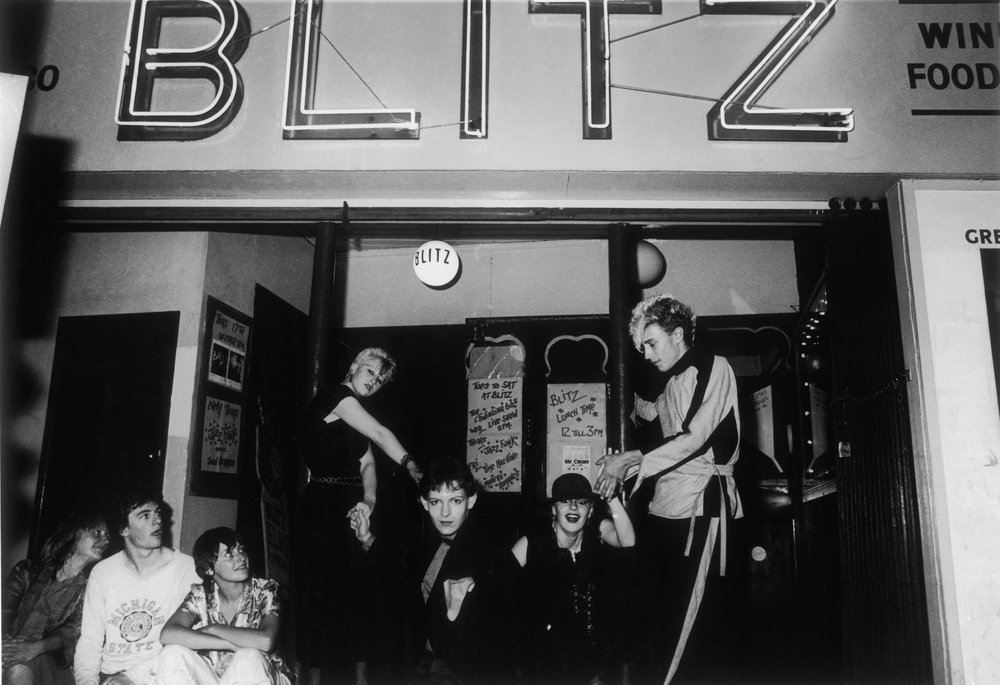
The Blitz photo credit | Museum of London
The eighties was when nightclub culture went into overdrive, initially via the New Romantic scene.
Although it opened in 1979, the Blitz became an important club in Soho during the following decade, a hub for the New Romantic sound to hang around and look fabulous, with Boy George and Marilyn dancing to a wild soundtrack put together by DJs Rusty Egan and Steve Strange.
The playlist was full of electronic beats alongside art school glam of Roxy Music, David Bowie, T-Rex and many more. Not only that, it was also where fashion, design and ideas all came together to rebound off each other.
Heaven
Located under Charing Cross Station, Heaven was opened in December 1979 by Jeremy Norman in a former night club called Global Village.
The newest iteration of the space quickly established itself as the centre of the (then understated) gay London nightlife.
Until Heaven opened, most gay clubs were small hidden cellar-bars or pub discos but Heaven brought gay clubbing out of the closet and gave London a club to rival anywhere else in the world."
The first resident DJ was the mighty Ian Levine who initially made a name for himself on the Northern Soul circuit. The club has weathered various challenges to remain open to this day.
Shoom
Held in a fitness centre in Southwark and run by DJ Danny Rampling, Shoom was inspired by a legendary trip to Ibiza with history seeing the night as a pre-emptive acid house party.
The night was small but it's uplifting soundtrack, smoke machine and sweat-drenched ceiling has made it one of London's most influential and revered clubbing legends.
In a Guardian interview, Danny said: "Shoom was more than just a club. It was a way of life. The Fitness Centre only held 300 people, so strong friendships were formed there. People used to bring gifts for each other. I'd end my set with Joyce Sims' 'Come Into My Life' or William Pitt's 'City Lights' or even The Art of Noise's 'Crusoe'. People would leave very blissed out and I'd go to the front door and say goodbye to everyone."
Ministry of Sound
Originally opened in 1991 in a converted bus garage in Elephant and Castle, Ministry of Sound was founded by Justin Berkmann, James Palumbo, and Humphrey Waterhouse.
The idea for the club stemmed from Justin's experiences in New York, dancing at legendary clubs including Save the Robots and the Paradise Garage. Entrepreneurs James and Humphrey helped with the financing of the club but for Justin, it was all about the music, working on creating the perfect sound system for the space and welcoming some of the DJs he'd witnessed in New York to the capital. It was down to his persuasive, personal skills that icons such as Francois K and Larry Levan were convinced to make the trip to London.
Since those early days, Ministry has grown into one of electronic music's most recognisable and distinctive dance music brands.
1990s | Rave revolution

Acid house took over the UK like never before at the end of the eighties/early nineties. This rave revolution was not confined to the club, with parties taking place all over the country, including in the great outdoors.
This peaked with the infamous illegal rave at Castlemorton held in Malvern. The week-long party saw party goers and sound systems from across the UK come together.
The event sparked outcry within the UK government who sought to vilify instigators and the culture Thirteen members of free party crew Spiral Tribe were arrested after the event, and charged with public order offences. After a lengthy and costly trial, they were eventually acquitted. However, concerns about these events led to the unveiling of the Criminal Justice and Public Order Act 1994. It made any outdoor parties "characterised by the emission of a succession of repetitive beats" illegal.
An unintended consequence was to see more, smaller parties coming to life while DJs also started returning to club spaces.
Fabric
Back in 1999 converting a derelict meat store in an unfashionable part of London into a venue seemed like a great idea. 26 years later, Fabric is still there despite various challenges including having to fight in court to stay open after drug-related deaths in the club.
Still, the likes of resident Craig Richards, the weekend-long parties and its popular mix series alongside an innate ability to continue showcasing London's latest scenes and sounds has ensured it's been able to endure and keep the flag flying for the capital's best underground electronic music.
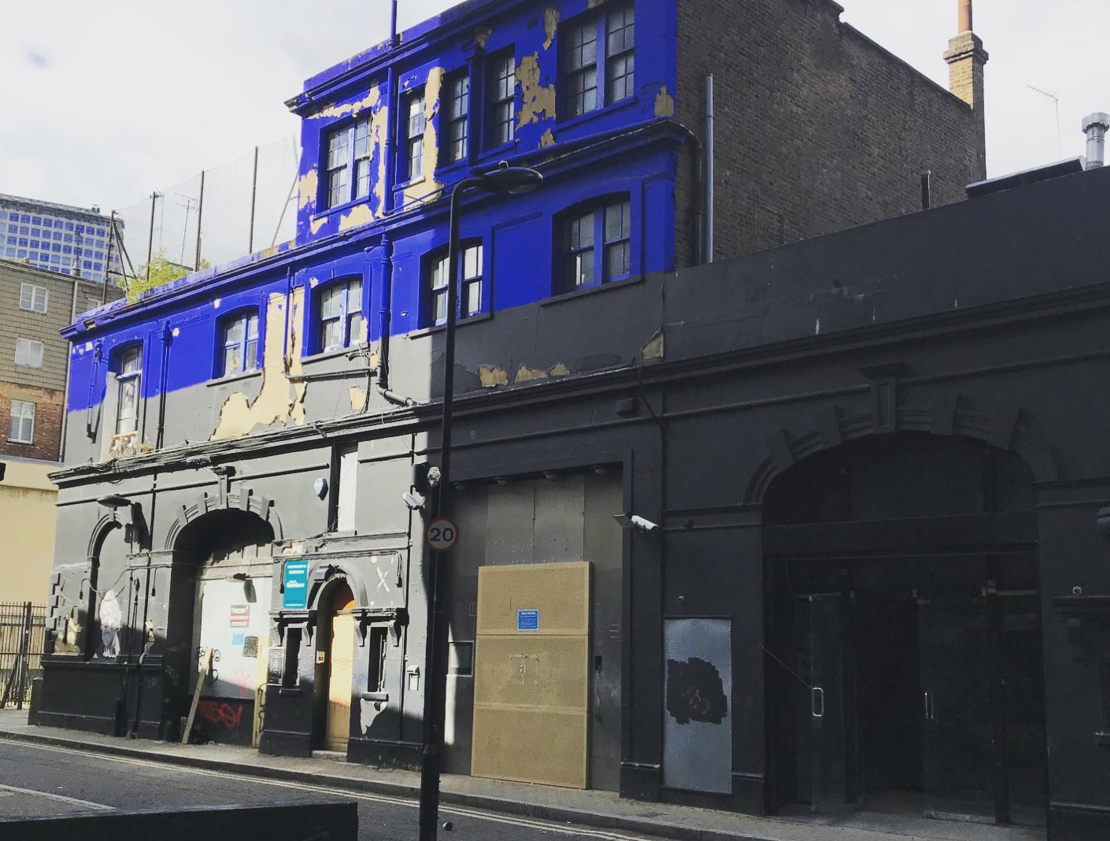
The End
The End was a nightclub in the West End of London launched in December 1995 by DJs Layo Paskin and Mr C.
Designed by Layo's architect father, the club was a vital space for all forms of club music over its lifespan.
One of The End's most infamous nights was Erol Alkan's influential Trash, an event whose mix of electroclash and indie bangers can now be heard in the music and attitude of artists like The Dare and Charli XCX."
The End closed in January after 13 years playing host to some of the biggest DJs in dance music after developers bought the club for £8 million with the intention of building apartments. But the deal subsequently collapsed.
The Blue Note in Hoxton
Hoxton and Shoreditch are now busy tourist hubs for visitors to London - but back in the nineties, these parts of the city were no-go areas to the point where far-right political party the National Front had its headquarters in this location.
However, the Blue Note did wonders for the area. This club was opened by Eddie Piller in 1993, after he bought a derelict jazz club called Bass Clef in what was at the time an almost entirely forgotten part of the city. Key club nights including Metalheadz made sure it would always be remembered for its musical contribution to the capital's cultural life rather than anything else.
2000s | Electroclash + Dubstep + Grime

If the nineties were about the rise of the DJ, then the next decade was more about the come down, where dance music exploded into thousands of shards of scenes, sonics and styles.
The superclub and superstar DJ of the previous decade was upended with an emphasis on smaller basements and vibrant, underground scenes.
In the leftfield, sounds were melting into weird and wonderful categories such as 'post-dubstep' and 'bass music', with collectives such as Hyperdub, Hessle Audio and Night Slugs building solid infrastructure and sense of scene.
Plastic People
The legendary basement space Plastic People moved from Oxford Street to its Shoreditch location on Curtain Road in 2000 which is where many of its most revered nights took place.
The brainchild of Ade Fakile, the club focused on intimate surroundings, brilliant DJs and of course, incredible sound quality.
Many of the world's best selectors - Four Tet, Floating Points, Josey Rebelle, Theo Parrish and Benji B - were regulars in the club, both behind the decks and on the dancefloor."
It was also home to dubstep night FWD before closing at the start of 2015.
Cable
The 1,300 capacity nightclub in SE1, which opened its doors in 2009, rapidly became one of London's biggest clubbing brands, playing host to thousands of popular DJs, artists and producers.
Jaded was one of the venue's key promoters alongside the We Fear Silence club brand that hosted various parties in Cable's grimy tunnels.
Landlord Network Rail took possession of Cable, which is housed in the arches under London Bridge station, and shut the club down in 2013.
XOYO Shoreditch
XOYO can be found just off Old Street roundabout in Shoreditch and has been a much-loved spot for parties since it opened its doors in 2010.
Split across two floors, the club has seen various acts and artists pass through including Hudson Mohawke while DJs such as Eats Everything and Goldie have enjoyed season-long residencies, DJing exclusively at the club while programming the rest of the electronic music talent to perform with them.
2010s | Post dubstep and Covid
The End photo credit | Facebook
In the 2010s, dance music culture was transformed by events online rather than on the dancefloor.
The Boiler Room started in 2010, when Blaise Bellville asked Thristian Richards to livestream a mix for a magazine. Boiler Room's first session in March 2010 turned into a weekly show with local DJs and beyond to become a scene-defining sensation.
NTS Radio launched the following year, with both rapidly becoming vital online hubs for electronic music culture to grow, showcasing not only London DJs, night and promoters but offering selectors from round the world a global platform.
Still, this period was also defined by turbulence in nightlife with clubbing institution Fabric under threat of closure - other legendary clubs also shut their doors during this time while the Mayor London's office published shocking figures revealing how the number of LGBTQ+ venues in London fell by 58 percent between 2006 and 2016.
Printworks
Originally opened in 2017, London nightclub Printworks made a huge impact in a short space of time due to its on-point booking policy and incredible architecture.
The building was previously a newspaper printing press located in South London and retained many of its original features when it opened.
Sadly, the club closed in 2022 when developers shared plans to redevelop the South London site into offices. However, it could re-open by 2026 after redevelopment plans were submitted by owners to Southwark Council.
The Cause
Stuart Glen and Eugene Wild first opened The Cause in Tottenham Hale in 2018 and became known for promoting DIY acts in their club space alongside a community garden and cafe.
The venture started as a small, 400-capacity venue, then expanded into a complex with multiple rooms and courtyards.
The Cause club was forced to close its Tottenham location due to increased development in the area in 2022 before finding a new, even bigger and more sprawling space in London's Docklands."
The Cause continues to adapt and evolve going from strength to strength with its programming in 2025.
FOLD
FOLD is an artist-led, community-driven nightclub and arts space committed to building - and protecting - safer spaces for all. Located in Canning Town in Newham, the club is known for its 24 hour parties, no phone policy and undisclosed line ups with the UNFOLD queer event the jewel in its crown.
The ringmaster at the centre of the marathon parties is Voicedrone, a DJ and event programmer.
The end of the decade saw the arrival of the Covid pandemic with one in five nightclubs permanently closing after the lockdown restrictions.
2020s | Post Covid renaissance
Of course, the start of the 2020s was overshadowed by the Covid pandemic which had a huge impact upon nightlife.
When restrictions were lifted, there was a huge appetite for going out but with some caveats. Alcohol education charity Drinkaware found that, as of 2021, young adults were the most likely to not drink alcohol at 28 percent.
In September 2024, the Nighttime Industries Association released figures showing that 37 percent of clubs have closed since March 2020. If the current rate of club closures continues, then clubs will be extinct by the end of the decade."
However, a rich variety of exciting nightspots are flying the flag and giving hope that there's plenty of appetite for going out and nightlife culture still left in the city.
Number 90 Hideout
Hackney Wick has been a playground for club venues in recent years, being connected by an overground line and with plenty of space for nocturnal fun.
Different venues call it home - but among the most progressive and exciting is Number 90 Hideout, a bespoke 450-capacity venue that opened in April 2025. Among the DJs to play include London production duo Make a Dance and DJ Giles Smith.
The Bath House
A not-for-profit community venue encompassing a cafe, bar, plus multiple event spaces and studios, the once-derelict Victorian baths were saved from disrepair in 2017.
The Bath House has since become a vibrant grassroots space, hosting everything from dance classes and open mic nights to life drawing and club events with GIANT STEPS, Club Alegría and others. Four Tet, Floating Points and Mr G are among the DJs to play.
Drumsheds
Reimagined from unused warehouses and on the site of what used to be an IKEA, Drumsheds offers a clubbing experience on a massive scale. This is big-room clubbing with events so far including Peggy Gou and Defected Records. Festivals, large-scale entertainment, private parties, fashion, exhibitions, set builds, filming, photography, product launches, and brand activations have also been held here while mysterious collective Sault used it as a blank canvas for their immersive and genre-defying debut live outing.
Alongside traditional clubs, dance music has spilled out in a dizzying number of spaces within our culture - from day festivals to sober raves via wellness events and innovative events like Annie Mac's Before Midnight, nightclubs might be closing but dance music continues to innovate and find new places to move within.
"Clubbing isn't becoming obsolete - it's evolving," Michael Kill told the National Geographic.
UK club culture has always been dynamic. It’s survived legal crackdowns, economic downturns and shifting musical landscapes. What we’re seeing now is more about transformation than decline."
Despite all the obstacles, it seems that London nightlife isn't going anywhere just yet with spaces still opening and fighting for survival.
Unleash Your Sonic Potential: Dive into the Art and Science of Electronic Music
Explore the exhilarating world of live electronic performance technologies and embark on a transformative journey across this BA (Hons) Electronic Music Production degree.
View the course
Explore the exhilarating world of live electronic performance technologies and embark on a transformative journey across this BA (Hons) Electronic Music Production degree.